 {ta.ya.} तय
  {ta.ra.} तर
  {ta.ru.} तरु
  {ta.ru} तरू
  {tar~} तर्
  {ta.la.} तल
  {ta.wa.} तव
  {ta.þa.} तस
 ta1ya1-075b2-2.htm
from: Online Sanskrit Dictionary, February 12, 2003 . http://sanskritdocuments.org/dict/dictall.pdf 090907
Downloaded, set in HTML, and edited by U Kyaw Tun, M.S. (I.P.S.T., U.S.A.), and staff of TIL Computing and Language Centre, Yangon, Myanmar. Not for sale. No copyright. Free for everyone.
index.htm | Top
SED-con-r4-indx.htm
{ta.ya.} तय
{ta.ra.} तर
{ta.ru.} तरु
{ta.ru} तरू
{tar~} तर्
{ta.la.} तल
{ta.wa.} तव
{ta.þa.} तस
{ta.ya.} तय
• तया (tayaa)
Skt: तया (tayaa) - by her - OnlineSktDict
•
तयोः (tayoH)
Skt: तयोः (tayoH) - of them - OnlineSktDict
*Pal: tayo num. m. three - UPMT-PED103
*Pal:  {ta.yau:}
 -
UHS-PMD0435
-
UHS-PMD0435
{ta.ra.} तर
• तर (tara)
Skt: तर (tara) - crossing over - OnlineSktDict
Pal: tara m. (√tar) a raft - UPMT-PED103
Pal:
{ta.ra.}
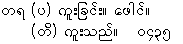 -
UHS-PMD0435
-
UHS-PMD0435
UKT: The Bur-Myan word used for 'raft' for 'crossing over' out of the cycle of birth and rebirth is:
{hpaung} .
• तरंतु (tara.ntu)
Skt: तरंतु (tara.ntu) - (Vr.Imp.IIIP.PI.PP) let
them cross - OnlineSktDict
• तरक (taraka)
Skt: तरक (taraka) - a demon slain by Kartikeya - OnlineSktDict
See my note on Taraka
• तरङ्ग (tara.nga)
Skt: तरङ्ग (tara.nga) - (m) wave - OnlineSktDict
• ताम्र शुल्बीय
tāmra śulbīya
= (त ा म ् र)
(श ु ल ् ब ी य)
n. copper sulphate - SpkSkt
www.spokensanskrit.de
091115
• तरङ्गः (tara.ngaH)
Skt: तरङ्गः (tara.ngaH) - m. wave -
OnlineSktDict
Pal: taraṅga m. a wave - UPMT-PED103
Pal:
 {ta.rïn~ga.}
 -
UHS-PMD0435
-
UHS-PMD0435
• तरणे (taraNe)
Skt: तरणे (taraNe) - in crossing - OnlineSktDict
• तरति (tarati)
Skt: तरति (tarati) - (1 pp) to cross - OnlineSktDict
• तरन् (taran.h)
Skt: तरन् (taran.h) - swimming or crossing - OnlineSktDict
• तरन्गेषु
(tarangeshhu)
Skt: तरन्गेषु
(tarangeshhu) - among the waves - OnlineSktDict
• तरन्ति (taranti)
Skt: तरन्ति (taranti) - overcome - OnlineSktDict
• तरिष्यसि
(tarishhyasi)
Skt: तरिष्यसि
(tarishhyasi) - you will overcome - OnlineSktDict
{ta.ru.} तरु
• तरु (taru)
Skt: तरु (taru) - tree - OnlineSktDict
Pal: taru m. a tree - UPMT-PED103
Pal:
{ta.ru.}
 -
UHS-PMD0435
-
UHS-PMD0435
• तरुणः (taruNaH)
Skt: तरुणः (taruNaH) - young man - OnlineSktDict
Pal: taruṇa adj. young, fresh, new - UPMT-PED103
Pal:
 {ta.ru.Na.}
 -
UHS-PMD0435
-
UHS-PMD0435
• तरुणी (taruNii)
Skt: तरुणी (taruNii) - young woman - OnlineSktDict
• तरुणौ (taruNau)
Skt: तरुणौ (taruNau) - (two) youngsters - OnlineSktDict
• तरुतलवासं
(tarutalavaasaM)
Skt: तरुतलवासं
(tarutalavaasaM) - living under the trees - OnlineSktDict
{ta.ru} तरू
• तरू (taruu)
= त र ू
Skt: तरू (taruu) - tree - OnlineSktDict
Pal: taru m. a tree - UPMT-PED103
Pal:
{ta.ru}
-
UHS-PMD0435
{tar~} तर्
• तर्केण (tarkeNa)
Skt: तर्केण (tarkeNa) - (masc.instr.Sing.)
logic - OnlineSktDict
• तर्जनं (tarjanaM)
Skt: तर्जनं (tarjanaM) - the fear - OnlineSktDict
• तर्जनी (tarjanii)
Skt: तर्जनी (tarjanii) - finger -
OnlineSktDict
Skt: तर्जनी
tarjanī f.
fore-finger - SpkSkt
Pal: tajjanī f. lit. 'the finger of scorn' ,
forefinger - UPMT-PED101
Pal:  {tiz~za.ni}
 -
UHS-PMD0428
-
UHS-PMD0428
• तर्हि (tarhi)
Skt: तर्हि (tarhi) - then, in that case -
OnlineSktDict
*Pal: tahiṁ adv. there - UPMT-PED103
*Pal:
 {ta.häin}
 -
UHS-PMD0436
-
UHS-PMD0436
{ta.la.} तल
• तल (tala)
Skt: तल (tala) - bottom - OnlineSktDict
Pal: tala n. surface, level, plane - UPMT-PED103
Pal:
{ta.la.}
 -
UHS-PMD0436
-
UHS-PMD0436
• तल्पः (talpaH)
Skt: तल्पः (talpaH) - (m) mattress - OnlineSktDict
{ta.wa.} तव
• तव (tava)
Skt: तव (tava) - Yours - OnlineSktDict
• तवं (tavaM)
Skt: तवं (tavaM) - you - OnlineSktDict
{ta.þa.} तस
• तस्थौ (tasthau)
Skt: तस्थौ (tasthau) - stood - OnlineSktDict
• तस्मात्
(tasmaat.h)
Skt: तस्थौ (tasthau) - hence - OnlineSktDict
• तस्मिन्
(tasmin.h)
Skt: तस्मिन्
(tasmin.h) - in that - OnlineSktDict
• तस्मिन्काये
(tasminkaaye)
Skt: तस्मिन्काये
(tasminkaaye) - tasmin.h + kaye, in that body - OnlineSktDict
• तस्मै (tasmai)
Skt: तस्मै (tasmai) - (masc.dat.S) to him - OnlineSktDict
• तस्य (tasya)
Skt: तस्य (tasya) - its - OnlineSktDict
• तस्यसुं
न्दरं (tasyasu..ndaraM)
Skt: तस्यसुं
न्दरं (tasyasu..ndaraM) - beautiful to him - OnlineSktDict
• तस्यां (tasyaaM)
Skt: तस्यां (tasyaaM) - in that - OnlineSktDict
• तस्यैश (tasyaisha)
Skt: तस्यैश (tasyaisha) - tasya + esha (H):
His + this - OnlineSktDict
• तक्षकः
(takShakaH)
Skt: तक्षकः
(takShakaH) - m. carpenter - OnlineSktDict
*Pal: takkhaka m. a carpenter - UPMT-PED101
*Pal: tacchaka a. a carpenter - PTS293
*Pal:
 {tac~hsa.ka.}
 - UHS-PMD0428
• तक्षति
(takShati)
Skt: तक्षति
(takShati) - to that - OnlineSktDict
Taraka is the name of a powerful demon who threatened to subjugate the world. He was able to grow so powerful because he had followed his austerities to such an extent that he became more powerful than the gods. Fearing his power, the gods went to Shiva, imploring him to help them against this terrible threat. Shiva created a champion, Karttikeya, to combat the foe. When he was ready, Karttikeya went forth and the two battled. Karttikeya was able to destroy the demon, and so rescued the world.UKT: In many Hindu translations, the word <demon> is used for Asura - the enemies of the Devas or <god>. However, in Bur-Myan tradition they are of the same breed always engaged in battle with the Devas. The Asuras are usually defeated and the Devas victorious. The king of Devas, Sakka aka
{þi.kra:} took as his queens the daughters of the Asura king after dethroning the Asura king. - UKT110826
Note: The name Śakra "powerful" as epithet of Indra is found in several verses of the Rigveda. In Buddhist texts, Śakra's myth and character are very different from those of the Vedic Indra. According to G.P. Malalasekara, "Sakka and Indra are independent conceptions. None of the personal characteristics of Sakka resemble those of Indra. Some epithets are identical but are evidently borrowed, though they are differently explained."[1] - Wikipedia: http://en.wikipedia.org/wiki/Sakra_Buddhism - 110826
The following is from Stephen T. Naylor, Encyclopedia Mythica http://www.pantheon.org/articles/t/taraka.html 100710
Taraka is also the name of a female Rakshasa whom Rama kills with his bow in his epic the Ramayana. At first he is reluctant to slay a woman, and just shoots off her arms. But then she becomes invisible. Using her magic, she hurls rocks and boulders at Rama and his companions, and they are hard-pressed to ward off her attack. Finally Rama closes his eyes and aims by sound only. He lets his arrow fly, and pierces the evil spirit through the heart.
Tārakā (or Tārā) was the second wife of Hindu God Brihaspati, God of planet Jupiter. According to the Puranas, Tara sired or mothered child named Budha (God of Mercury) through Chandra (Soma). - Wikipedia http://en.wikipedia.org/wiki/Taraka 110826
Go back Taraka-note-b
End of TIL file