Update:
2008-09-11 01:16 PM +0800
TIL
The Saraswati: Where lies the mystery
where-mystery.htm
by Saswati Pai k, GIS Development,
www.gsbkerala.com/saraswati.htm
Downloaded and edited by U Kyaw Tun, M.S. (I.P.S.T., U.S.A.) and staff of
TIL. Not for sale. Prepared for internal use of TIL Computing and
Language Center, Yangon, Myanmar.
indx-myan |
Top
indx-folk
Contents of this page
History
Evidences supporting Palaeochannels
Contents of this page
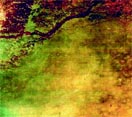 Climatic change and geotectonic movements have led to
migration and abandonment of several rivers and drainage systems. Some of them
are ‘lost’ because of the overburden of silt. But several evidences left by them
usually help in proving the existence of a geomorphic feature in a particular
location, which attract the attention of the interested people to discover the
past. In India, the river Saraswati reflects such a fascinating history,
supported by geological, hydrological and archaeological evidences as well as
the records of the most modern tools, such as remote sensing and GIS. With the
aid of remote sensing through orbiting satellites, the mystery of the river is
more or less solved.
Climatic change and geotectonic movements have led to
migration and abandonment of several rivers and drainage systems. Some of them
are ‘lost’ because of the overburden of silt. But several evidences left by them
usually help in proving the existence of a geomorphic feature in a particular
location, which attract the attention of the interested people to discover the
past. In India, the river Saraswati reflects such a fascinating history,
supported by geological, hydrological and archaeological evidences as well as
the records of the most modern tools, such as remote sensing and GIS. With the
aid of remote sensing through orbiting satellites, the mystery of the river is
more or less solved.
Geological record indicates that
during the late Pleistocene glaciation, the water of the Himalayas was
frozen and that in the place of rivers, there were only glaciers, masses of
solid ice. When the climate became warmer, the glaciers began to break up
and the frozen water held by them surged forth in great floods, inundating
the alluvial plains in front of the mountains. The melting of glaciers has
also been referred in Rig Vedic literature, in mythological terms. It was
the first interglacial period in Holocene marking the break-up of glaciers
and release of the pent-up waters that flowed out in seven mighty river
channels referred as the ‘Sapta Sindhu’ in the Rig Veda, traced from east to
west. The ‘Sapta Sindhu’ refers to the rivers Saraswati, Satadru (Sutlej),
Vipasa (Beas), Asikni (Chenab), Parosni (Ravi), Vitasta (Jhelum) and Sindhu
(Indus). Among these, the Saraswati and the Sindhu were major rivers that
flowed from the mountains right up to the sea. The hymns in praise of the
Saraswati are probably some of the oldest, composed more than 8000 years
ago.
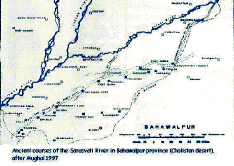 For 2000 years, between 6000 and 4000 B.C., the Saraswati flowed as a great
river. R. D. Oldham (1886) was the first geologist who argued logically
pointing to the great changes in the drainage pattern of the rivers of
Punjab and western Rajasthan converting a once fertile region into a desert.
According to geological and glaciological studies, the Saraswati was
supposed to have originated in Bandapunch massif (Saraswati-Rupin glacier
confluence at Naitwar in western Garhwal).
For 2000 years, between 6000 and 4000 B.C., the Saraswati flowed as a great
river. R. D. Oldham (1886) was the first geologist who argued logically
pointing to the great changes in the drainage pattern of the rivers of
Punjab and western Rajasthan converting a once fertile region into a desert.
According to geological and glaciological studies, the Saraswati was
supposed to have originated in Bandapunch massif (Saraswati-Rupin glacier
confluence at Naitwar in western Garhwal).
The river, which had originated from Kapal tirith in the Himalayas in the
west of Kailash, was flowing southward to Mansarovar and then taking a turn
towards west. Even today the Saraswati flows from the south of Mana pass
which meets river Alaknanda, 3 km away in the south of Mana village.
Descending through Adibadri, Bhavanipur and Balchapur in the foothills to
the plains, the river took roughly a southwesterly course, passing through
the plains of Punjab, Haryana, Rajasthan, Gujarat and finally it is believed
to have debounched into the ancient Arabian Sea at the Great Rann of Kutch.
In this long journey, the Saraswati is believed to have had three
tributaries, Shatadru (Sutlej) originating from Mount Kailas, Drishadvati
from Siwalik Hills and the old Yamuna. They flowed together along a channel,
presently known as the Ghaggar River, which is known as Hakra River in
Rajasthan and Nara in Sindh. Some experts consider these two rivers as a
single river whereas others consider the upper course of the Saraswati as
Ghaggar and the lower course as the Hakra River, while some others call the
Saraswati of the weak and declining stage as the Ghaggar.
The river was obliterated within a short span, in the Quarternary period
of the Cenozoic era, through a combination of destructive catastrophic events.
The decline of the river appears to have commenced between 5000 and 3000
B.C., probably precipitated by a major tectonic event in the Siwalik
Hills of Sirmur region. Geological studies reveal that the massive
landslides and avalanches were caused by destabilising tectonic
events which occurred around the beginning of Pleistocene, about 1.7
million years ago in the entire Siwalik domain, extending from
Potwar in Pakistan to Assam in India. Those disturbances, linked to
uplift of the Himalayas, continued intermittently. Presumably, one
of these events must have severed the glacier connection and cut off
the supply of melt water from the glacier to this river; as a
result, the Saraswati became non-perennial and dependent on monsoon
rains. The diversion of the river water through separation of its
tributaries led to the conversion of the river as disconnected lakes
and pools; ultimately it was reduced to a dry channel bed.
Therefore, the river Saraswati has not disappeared but only dried up
in some stretches.
Contents of this page
• Hydrogeological evidences
Lunkaransar, Didwana and Sambhar, the Ranns of
Jaisalmer, Pachpadra, etc. are a few of the notable lakes, formed
as a result of the changes; some of them are highly saline today,
the only proof to their freshwater descent being occurrences of
gastropod shells in those lake beds. Mr. Oldham accepted that
there have been great changes in the hydrography of Punjab and
Sind within the recent period of geology. Wilson has mentioned
about the Sotar valley where “the soil is all rich alluvial clay
such as is now being annually deposited in the depressions which
are specimens of those numerous pools which have given the
Saraswati its name, ‘The River of Pools’; and there seems little
doubt that the same action, as now goes on, has been going on for
centuries”.
• Archaeological evidences
Most of the archaeological sites of the-then
civilisation are located on the Saraswati river basin. There are
four Harappan and pre-Harappan sites in Punjab, in addition to the
sites in Rajasthan and U.P. These sites are located at Rupar
(present Ropar), Nihang Khan, Bara and Sirsa valley. Harappan
culture flourished in the western part of Punjab around 2500 B.C.
It is believed that the Harappans entered through the Indus Valley
into Kalibangan valley on the left bank of Ghaggar (erstwhile
Saraswati) and spread to Punjab along the Saraswati River. Carbon
dating of the material at Kalibangan suggests that Harappan
culture flourished around 2500 B.C. in India and existed for 1000
years. So the present day geomorphologic set up did not exist till
1500 B.C. and the Indus, the Sutlej and the Beas followed
independent courses to the sea.
• Evidences from Remote Sensing and GIS
A remote sensing study of the Indian desert
reveals numerous signatures of palaeochannels in the form of
curvilinear and meandering courses, which is identified by the
tonal variations. The Saraswati River could be traced through
these palaeochannels as a migratory river. Its initial course
flowed close to the Aravalli ranges and the successive six stages
took west and northwesterly shifts till it coincides with the dry
bed of the Ghaggar River.
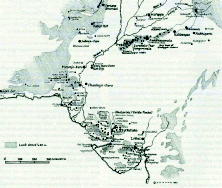 It is found that the course of the river Saraswati in the
states of Punjab, Haryana and Rajasthan is clearly highlighted in
the LANDSAT imagery by the vegetation cover thriving on the rich
residual loamy soil along its earlier course. Digital enhancement
studies of IRS-1C data (1995), combined with RADAR imagery from
European Remote Sensing satellites ERS 1/2, identified subsurface
features and recognised the palaeochannels beneath the sands of the
Thar Desert. A study of NRSA, based on satellite derived data, has
revealed no palaeochannel link between the Indus and the Saraswati,
confirming that the two were independent rivers; also, the three
palaeochannels, south of Ambala, seen to swerve westwards to join
the ancient bed of the Ghaggar, are inferred to be the tributaries
of Saraswati/Ghaggar, and one among them, probably Drishadvati.
Digital enhancement techniques using high resolution LISS-III data
of IRS-1C satellite, together with pyramidal processing, identified
two palaeochannels trending NE-SW in Jaisalmer district of
Rajasthan, which are presumed to be the lost river Saraswati. In a
study, NRSA used Indian Remote Sensing Satellite (IRS-P3) Wide Field
Sensor (WiFS) data covering the Indus river system to study the
palaeodrainage in northwestern India. The image elements such as
tone, colour, texture, pattern, association of WiFS and SIR-C/X-SAR
images helped to derive information on current as well as
palaeodrainage. WiFS image reveals very faint trace of the river
Saraswati/Ghaggar while in the SIR-C/X-SAR image, the connectivity
of the palaeochannel could be easily established due to the presence
of dark irregular shaped features associated with wetness.
It is found that the course of the river Saraswati in the
states of Punjab, Haryana and Rajasthan is clearly highlighted in
the LANDSAT imagery by the vegetation cover thriving on the rich
residual loamy soil along its earlier course. Digital enhancement
studies of IRS-1C data (1995), combined with RADAR imagery from
European Remote Sensing satellites ERS 1/2, identified subsurface
features and recognised the palaeochannels beneath the sands of the
Thar Desert. A study of NRSA, based on satellite derived data, has
revealed no palaeochannel link between the Indus and the Saraswati,
confirming that the two were independent rivers; also, the three
palaeochannels, south of Ambala, seen to swerve westwards to join
the ancient bed of the Ghaggar, are inferred to be the tributaries
of Saraswati/Ghaggar, and one among them, probably Drishadvati.
Digital enhancement techniques using high resolution LISS-III data
of IRS-1C satellite, together with pyramidal processing, identified
two palaeochannels trending NE-SW in Jaisalmer district of
Rajasthan, which are presumed to be the lost river Saraswati. In a
study, NRSA used Indian Remote Sensing Satellite (IRS-P3) Wide Field
Sensor (WiFS) data covering the Indus river system to study the
palaeodrainage in northwestern India. The image elements such as
tone, colour, texture, pattern, association of WiFS and SIR-C/X-SAR
images helped to derive information on current as well as
palaeodrainage. WiFS image reveals very faint trace of the river
Saraswati/Ghaggar while in the SIR-C/X-SAR image, the connectivity
of the palaeochannel could be easily established due to the presence
of dark irregular shaped features associated with wetness.
Missing of a prominent river from the map is not a mystery;
it is quite natural as the natural phenomena evolve through
environmental changes. A part of the river Saraswati till now exists
as Ghaggar in Haryana, the rest of it has disappeared in the fringes
of the Marusthali or the Thar Desert. Bhabha Atomic Research Centre,
Mumbai has made a breakthrough in its research for the existence and
probable location of the mythical Saraswati river. The Rajasthan
Ground Water Department undertook the task to ‘unearth’ the river
with the collaboration of BARC and Physical Research Laboratory,
Ahmedabad (a wing of ISRO) in 1998. If the effort is successful, the
people living in the desert belt of Rajasthan will be hopefully
supplied more than 3500 year old water derived from palaeo-channels,
believed to be the mythical Saraswati.
Contents of this page
End of TIL file