 R>
R>RC-Temple37.htm
Collection U Kyaw Tun (UKT),
M.S. (I.P.S.T., U.S.A.). Not for sale. Prepared for students of TIL Computing
and Language Center, Yangon, MYANMAR.
Sources:
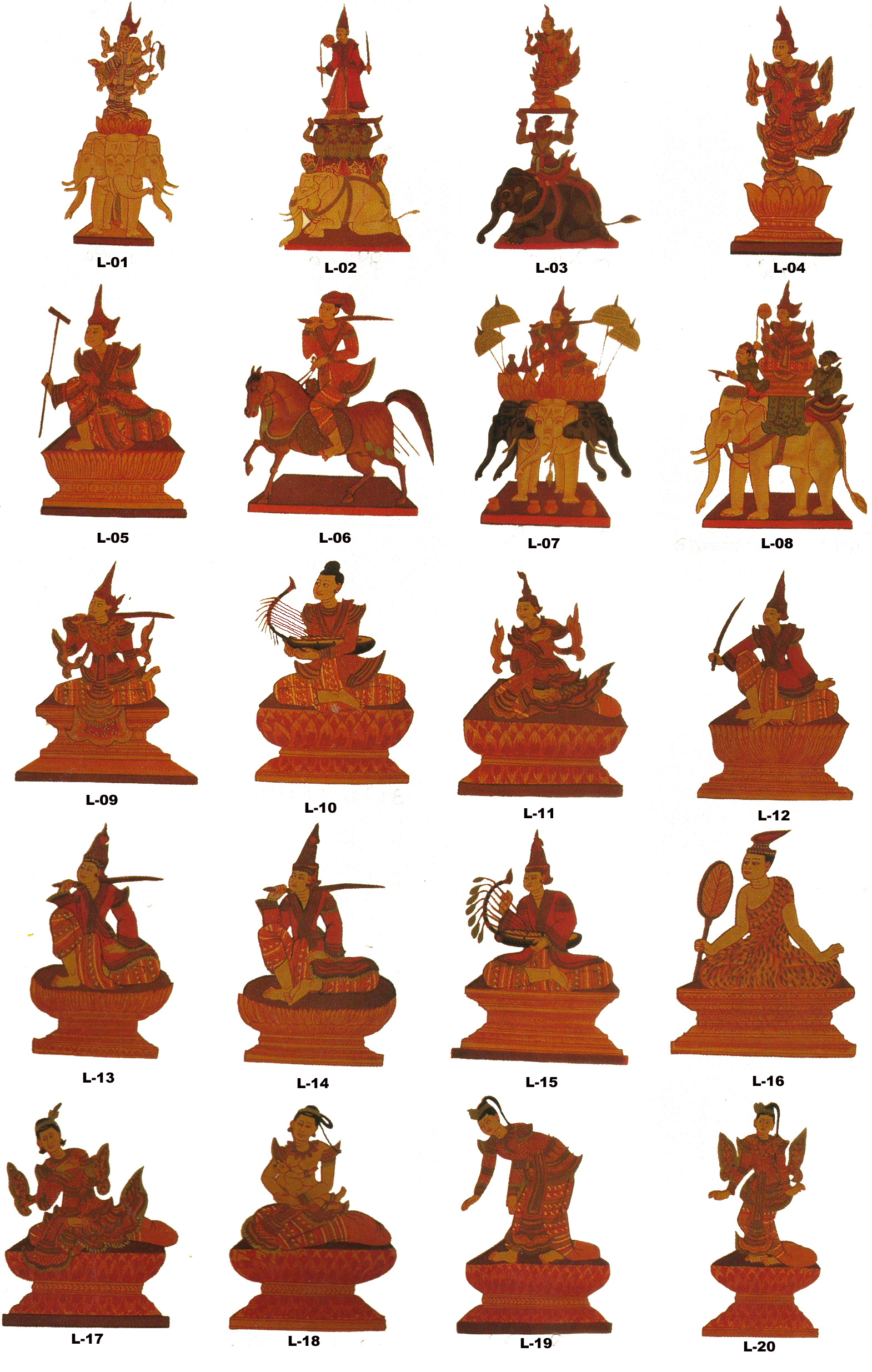
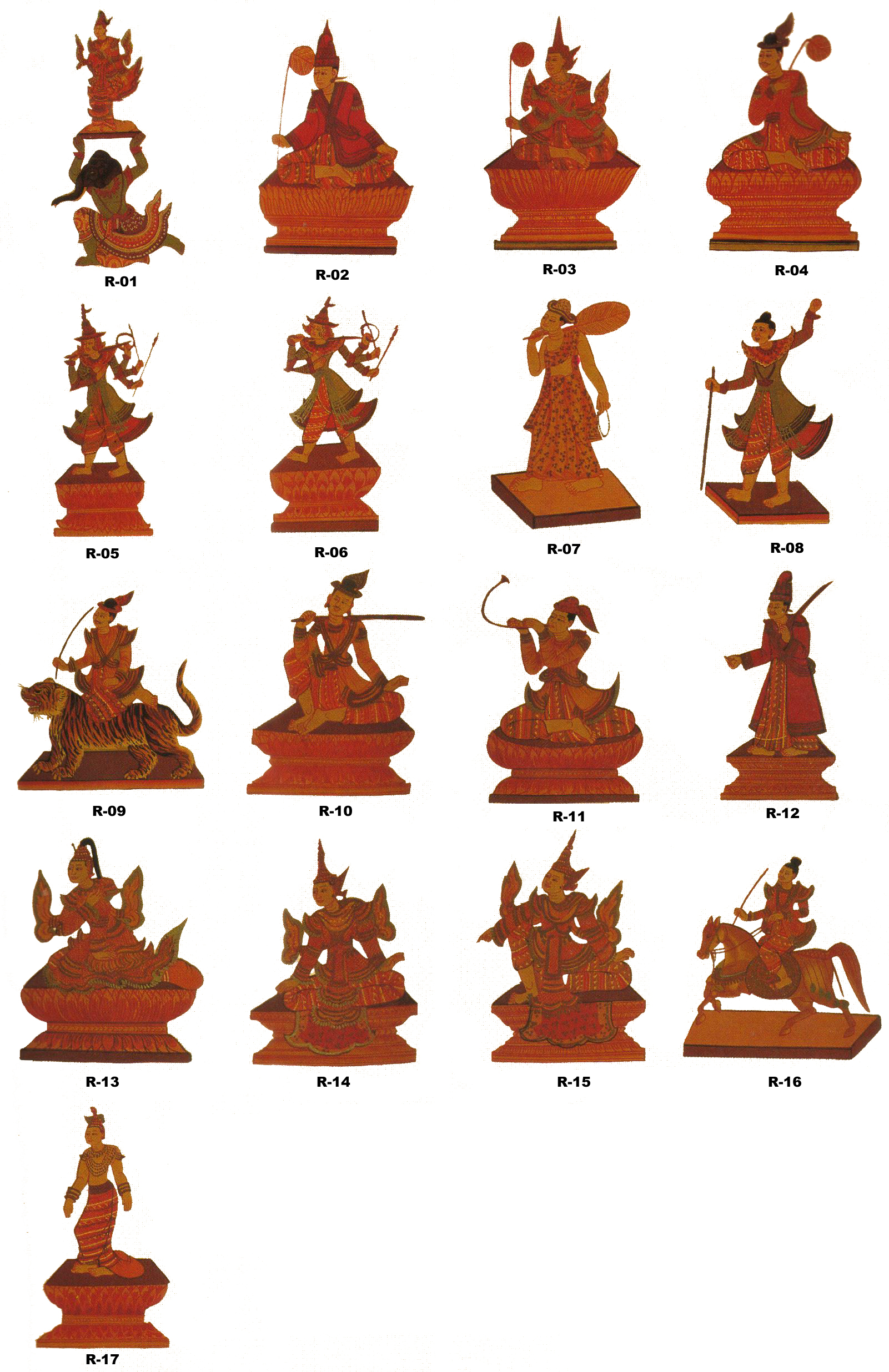
• Klein, W, Burma, Apa Productions (HK) Ltd, 1981, Pictures on (L-page)
p88; and on (R-page) p89: taken from
R.C.
Temple's classic work, the 37 Nats (London, 1906)
• Wikipedia,
http://en.wikipedia.org/wiki/Nat (spirit) (080926)
Contents of this page
Identification of the nats
List of official nats
01. Thagya Min
02. Min Mahagiri
03. Hnamadawgyi or Royal Sister
04. Shwenaby
05. Thonbanhla (Beautiful in Three Ways)
06. Taungoo Mingaung
07. Mintara
08. Thandawgan 09. Shwe Nawrahta 10.
Aung Zwa Magyi
11. Ngazi Shin 12. Aung Pinle Hsinbyushin 13.
Taungmagyi
14. Maung Min Shin 15. Shindaw 16.
Nyaung Gyin O
17. Tabinshwehti 18.
Min Yè Aung Din 19. Shwe Sitpin
20. Medaw Shwezaga 21. Maung Po Tu 22.
Yun Bayin
23. Maung Minbyu 24. Mandalay Bodaw 25.
Shwe Hpyin Naungdaw
26. Shwe Hpyin Nyidaw 27.
Mintha Maungshin 28. Htibyusaung
29. Htibyusaung Medaw 30.
Bayinma Shin Mingaung 31.
Min Sithu or
Alaungsithu
32. Min Kyaw Zwa, aka U Min Gyaw 33.
Myaukhpet Shinma 34. Anauk Mibaya
35. Shingon 36. Shingwa 37.
Shin Nemi
Original pictures given in download
UKT: So far (080926), I have not been able to get the book by R. C. Temple. The nearest I could get was by W. Klein, Burma, Apa Productions (HK) Ltd, 1981, p88 (L-page) and p89 (R-page). I can't remember when I downloaded the pictures (most probably in 2002), and I can't remember if there were legends to go with the pictures. When I looked into what I had downloaded, I found two remarks I had made then:
• The following figures were from Klein, W, Burma, Apa Productions (HK) Ltd, 1981, p88 (L-page) and p89 (R-page). The legend given by Klein:
"The 37 nats have changed their identities through the ages, but their number has remained constant. The nats represented in this collage, taken from Sir R.C. Temple's classic work, the 37 Nats (London, 1906), may not be the same 37 as Burmese worship today."• The description of the images by U Po Kya [in Burmese-Myanmar] generally agreed with that of R. C. Temple.
I had to rely on the descriptions given by U Po Kya until I came across the Wikipedia article of 080926. The names given in Romabama are mine based on Wikipedia names. The serial numbers of U Po Kya and Dr. Htin Aung have been made the same for ease of comparison and reference.
From: http://en.wikipedia.org/wiki/Nat_ (spirit) 080926
King Anawrahta of Bagan (1044-1077) designated an official pantheon of 37 Nats, after he had failed to enforce a ban on nat worship. His stratagem of incorporation by bringing the nats to his Shwezigon Pagoda in positions of worshipping the Buddha, and by enlisting Thagya Min at the head of the pantheon above the Mahagiri nats, eventually succeeded.[5][7] Seven out of the 37 Nats appear to be directly associated with the life and times of Anawrahta.[7] The official pantheon is made up predominantly of those from the royal houses of Burmese history, but also contains nats of Thai (Yun Bayin) and Shan (Maung Po Tu) descent. Listed in proper order as follows. [UKT - Transcription of Burmese-Myanmar names are from Wikipedia. I have transliterated these names in Romabama.]
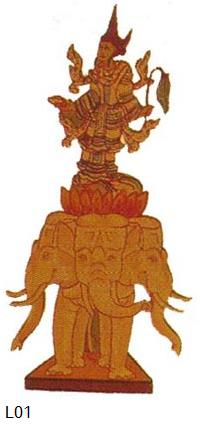
R>Wikipedia: {thi.kra: ming:} - Considered King of the Nats, is identified with the
Buddhist
deva Śakra
and the Hindu
deity Indra.[8].
He is often portrayed atop a three-headed
white elephant, holding a
conch shell in one hand, and a yak-tail whisk in the other.[8]
wiki08 ^ a
b
c
d
e
f
g
h
i
j
k
l
m
n
o
p
q
r
s
t
u
v
w
x
y
z
aa
ab
ac
ad
ae
af
ag
ah
Hla Tha Mein. "Thirty-Seven
Nats". Yangonow. Retrieved on
2006-07-03.
Dr. Htin Aung 01. Thagyamin (the King of the Gods)
U Po Kya 01. {thi.kra:ming:}
 <L
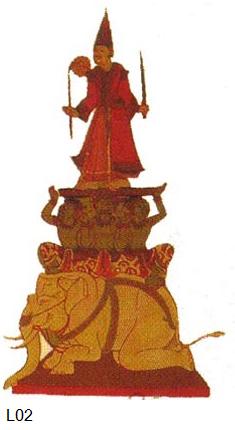
<LWikipedia: {ming: ma.ha.gi.ri.} - Son of a famous blacksmith, U Tint Daw. His given name
was Maung Tint De (Nga Tinde) or Mr Handsome. He was extremely strong, able to
break the tusks of an elephant. The King of Tagaung was worried, least he
attempt to usurp his throne, so Maung Tint De hid himself in a village. As a
stratagem, the king married Maung Tint De's sister, Saw Me Ya, also called Myat
Hla or Shwe Myet-hna (Golden Face), to become one of his queens. He persuaded
Saw Me Ya to ask her brother to come out of hiding so that he could be given a
high office. However when Maung Tint De came out of hiding, the king had him
arrested and burned alive tied to a
Champac (sagawabin) tree.[8][9]
His sister (see below) also died with him and the two became evil Nats resident
in that tree, periodically feasting on people who happened to come near the
tree. The King of Tagaung (Tagaung Min) had the tree cut down and cast
into the waters of the Irrawaddy where it floated, coming to rest in the kingdom
in Bagan ruled by King Thinligyaung (344-387), when the two Nats appeared in a
dream apprising the king of their plight. They offered to guard the city if they
were given a place to dwell. King Thinligyaung had the trunk carried to Mount
Popa, divided into two parts (one for each Nat) and carved with human features.
Henceforth Maung Tint De was to be known as the Lord of the Great Mountain. They
were also enshrined on either side of the city's
Tharabha Gate, Maung Tint De on the right and Shwe Myet-hna on the left.[3][7][9]
Later kings had golden heads made of the two Nats and had these heads mounted on
pillars at Mt Popa (the ones from 1812 are still worshiped at the mountain).
wiki03 ^ a
b
c
d
Spiro, Melford E (1996).
Burmese Spiritualism. Transaction Publishers.
Retrieved on 2008-09-15.
wiki07 ^ a
b
c
d
e
f
g
h
i
DeCaroli, Robert (2004).
Haunting the Buddha: Indian Popular Religions and the Formation of Buddhism.
Oxford Univ. Press, US.
Retrieved on
2008-09-13.
wiki08 ^ a
b
c
d
e
f
g
h
i
j
k
l
m
n
o
p
q
r
s
t
u
v
w
x
y
z
aa
ab
ac
ad
ae
af
ag
ah
Hla Tha Mein. "Thirty-Seven
Nats". Yangonow. Retrieved on
2006-07-03.
wiki09 ^ a
b
"Sacred
Mount Popa". MRTV3. Retrieved on
2008-09-13.
Dr. Htin Aung
02. The Lord of the Great Mountain
U Po Kya
02. {ma.ha-gi-ri. nat}
U Po Kya described the image of Minmahagiri as: standing on belu platform on white-elephant, dressed like a prince with {baung:} head-dress, conical ear ornament, and crossed-sash, fan in left-hand and sword in right-hand.
 R>
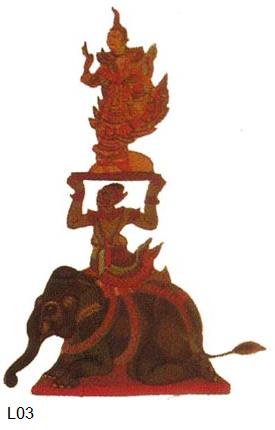
R>Wikipedia: {nha.ma.tau-kri:} - Her given name was Saw Me Ya, the elder sister of Maung
Tint De. She became the queen of the King of Tagaung. When she saw her brother
being burned alive, she leapt into the fire, but only managed to save his head.
She died of her burns and became a Nat. She is portrayed standing on a dais upon
a black elephant, her right hand on her chest with a plum between her thumb and
index finger, and her left hand by her side.[8]
wiki08 ^ a
b
c
d
e
f
g
h
i
j
k
l
m
n
o
p
q
r
s
t
u
v
w
x
y
z
aa
ab
ac
ad
ae
af
ag
ah
Hla Tha Mein. "Thirty-Seven
Nats". Yangonow. Retrieved on
2006-07-03.
Dr. Htin Aung
03. Princess Golden Face
U Po Kya 03. {nha.ma.tau}
U Po Kya described the image of sister as: standing on belu platform on black
female-elephant, right-hand on chest with thumb and pointer-finger holding a Terminalia
citrina fruit {kra.su.thi:}, left-hand hanging down.
 <L
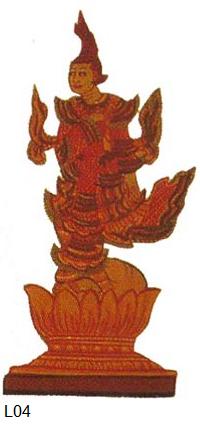
<LWikipedia: {rhwé-na.Bé} was a beautiful woman of Mindon Village who married a
Naga. Later, her husband deserted her and she died of a broken heart.
Another story maintains that she was actually the wife of Maung Tint De. She is
portrayed standing, wearing Naga headdress, her right hand on her chest and her
left hand by her side.[8]
wiki08 ^ a
b
c
d
e
f
g
h
i
j
k
l
m
n
o
p
q
r
s
t
u
v
w
x
y
z
aa
ab
ac
ad
ae
af
ag
ah
Hla Tha Mein. "Thirty-Seven
Nats". Yangonow. Retrieved on
2006-07-03.
Dr. Htin Aung
04. Lady Golden Sides
U Po Kya
04. {rhwé-na.pé}
U Po Kya described the image as: standing on lotus platform;
head-dress in the form of the head and hood of a naga,
conical ear-ornament, right-hand on chest, left-hand down.
 R>
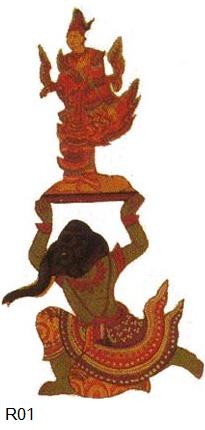
R>Wikipedia: {thoän:pan-lha.} was a native of a Mon village called Takunnwan. She was
(sic) "beautiful in three ways within one day." She was given to King Duttabaung
of Pyay, but the
queen was jealous of her beauty and told the king that she was actually very
ugly and so fat that she could not fit through the city gate. Hearing this, the
king refused to marry Thonbanhla who then died in despair. Another story says
that she was the younger sister of Maung Tint De. She married King Samim Htaw
Yama of Utthala and gave birth to a daughter, Shin Mi-hnè, but then died of a
sudden illness. She is portrayed standing on an
ogre bending over a
dais supported by an elephant. She wears a topknot, her right hand on her chest
and her left hand by her side.[8]
wiki08 ^ a
b
c
d
e
f
g
h
i
j
k
l
m
n
o
p
q
r
s
t
u
v
w
x
y
z
aa
ab
ac
ad
ae
af
ag
ah
Hla Tha Mein. "Thirty-Seven
Nats". Yangonow. Retrieved on
2006-07-03.
Dr. Htin Aung
05. Lady Three Times Beautiful
U Po Kya
05. {thoän:pan-lha.}
U Po Kya described the image as: standing on belu-platform above elephant,
hair in knot, right-hand on chest, left-hand down.
 <L
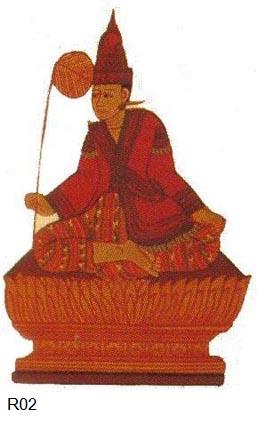
<LWikipedia: {taung:ngu ming:hkaung} - a minor governor of
Taungoo and
son of Min Yè Theinkàthu, the royal attendant, he died of illness. He is
portrayed sitting crosslegged on a simple couch wearing royal garments, holding
a fan in his right hand and resting his left hand on his knee.[8]
wiki08 ^ a
b
c
d
e
f
g
h
i
j
k
l
m
n
o
p
q
r
s
t
u
v
w
x
y
z
aa
ab
ac
ad
ae
af
ag
ah
Hla Tha Mein. "Thirty-Seven
Nats". Yangonow. Retrieved on
2006-07-03.
Dr. Htin Aung
35. Lord Minhkaung of Toungoo
U Po Kya
35. {taung-ngu-rhing ming:hkaung}
 R>
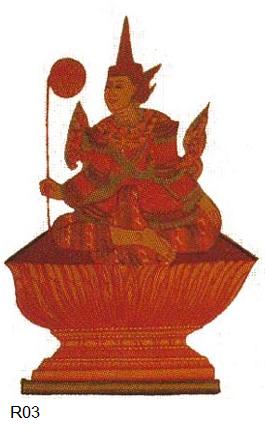
R>Wikipedia: {ming:ta.ra:} - the King of
Innwa, was hunting in
the forest where he met a fairy, and went insane when the fairy disappeared.
While he was in this state, one of his followers, Nga Nawk, murdered him. He is
portrayed sitting on a throne, wearing his royal garments with a fan in his
right hand and his left hand resting on his knee.[8]
wiki08 ^ a
b
c
d
e
f
g
h
i
j
k
l
m
n
o
p
q
r
s
t
u
v
w
x
y
z
aa
ab
ac
ad
ae
af
ag
ah
Hla Tha Mein. "Thirty-Seven
Nats". Yangonow. Retrieved on
2006-07-03.
Dr. Htin Aung
24. The Lord King, Master of Justice
U Po Kya
24. {ming:ta.ra: nat}
 <L
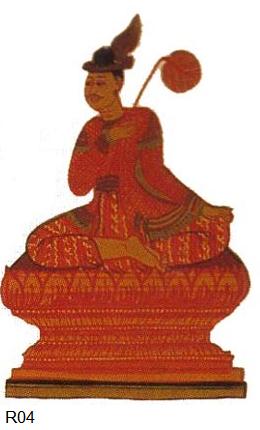
<LWikipedia: {thän-tau-hkän} - a royal messenger of King Minkhaung of Taungoo, his given
name was Yè Thiha. He went into the forest to gather flowers, contracted
malaria, and died. He is portrayed sitting on a lotus pedestal holding a fan in
his right hand and his left hand resting on his knee.[8]
wiki08 ^ a
b
c
d
e
f
g
h
i
j
k
l
m
n
o
p
q
r
s
t
u
v
w
x
y
z
aa
ab
ac
ad
ae
af
ag
ah
Hla Tha Mein. "Thirty-Seven
Nats". Yangonow. Retrieved on
2006-07-03.
Dr. Htin Aung
36. Royal Secretary
U Po Kya 36. {thän-tau-hkän}
 R>
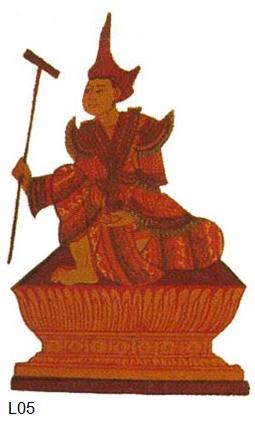
R>Wikipedia: {rhwé nau-ra.hta} - grandson of King Minkhaung II of Innwa (1481-1502). His
servant tried to assassinate the king, but was caught and put to death. Because
of Shwe Nawrahta's involvement in the plot, he too was put to death. He is
portrayed sitting with one knee raised upon a simple throne, holding a
gu lee ball in
one hand and a gu lee stick in the other.[8][10]
wiki08 ^ a
b
c
d
e
f
g
h
i
j
k
l
m
n
o
p
q
r
s
t
u
v
w
x
y
z
aa
ab
ac
ad
ae
af
ag
ah
Hla Tha Mein. "Thirty-Seven
Nats". Yangonow. Retrieved on
2006-07-03.
wiki10 ^
Dr Khin Maung Nyunt. "The
Equestrian Festival". myanmars.net. Retrieved on
2008-09-11.
Dr. Htin Aung
29. Golden Nawrahta
U Po Kya
29. {rhwé-nau-ra.hta}
 <L
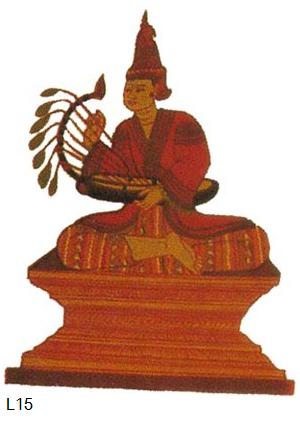
<LWikipedia: {aung-swa ma.kri:}, also called Bo Aung Zwa, was a commander in the service
of King Narapatisithu of Bagan (1173-1210). He was killed by the king when he
showed disrespect to the king, who had failed to keep his promise of rewarding
him with one of his maids. He is portrayed sitting on a throne, playing a harp
and wearing a headdress and a sash.[8]
wiki08 ^ a
b
c
d
e
f
g
h
i
j
k
l
m
n
o
p
q
r
s
t
u
v
w
x
y
z
aa
ab
ac
ad
ae
af
ag
ah
Hla Tha Mein. "Thirty-Seven
Nats". Yangonow. Retrieved on
2006-07-03.
Dr. Htin Aung
20. Captain of the Main Army Aungswa
U Po Kya
20. {aung-swa-ma.kri:}
 R>
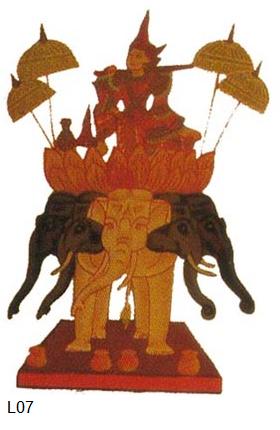
R>Wikipedia: {nga:si:rhing} - (Lord of
Five Elephants), also called Kyaw Zwa, became King of Pinya (1343-1350) after
his father Thihathu died. He acquired five white elephants, and died of illness
in the eighth year of his reign. He is portrayed sitting on a lotus supported by
a five-headed elephant, and shaded by four white royal umbrellas.[8]
wiki08 ^ a
b
c
d
e
f
g
h
i
j
k
l
m
n
o
p
q
r
s
t
u
v
w
x
y
z
aa
ab
ac
ad
ae
af
ag
ah
Hla Tha Mein. "Thirty-Seven
Nats". Yangonow. Retrieved on
2006-07-03.
Dr. Htin Aung
23. Lord of Five Elephants
U Po Kya
23. {nga:si:rhing}
 <L
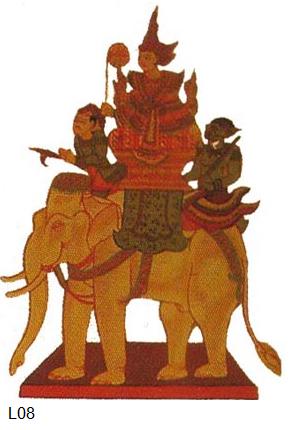
<LWikipedia: {aung-ping-lèý hsing-hpru-rhing} - (Lord of the White Elephant of Aung Pinle), King Thihathu II (1422-1426) and son
of King Minkhaung of Innwa (1401-1422), was killed by an arrow released by his
enemy the Sawbwa
of Ohnbaung at the Battle of Aung Pinle. He was portrayed sitting crosslegged on
a throne on elephant back in full regalia, with one of the elephant attendants
crouching in front and another on horseback wielding a sword.[8]
wiki08 ^ a
b
c
d
e
f
g
h
i
j
k
l
m
n
o
p
q
r
s
t
u
v
w
x
y
z
aa
ab
ac
ad
ae
af
ag
ah
Hla Tha Mein. "Thirty-Seven
Nats". Yangonow. Retrieved on
2006-07-03.
Dr. Htin Aung
27. Lord of Aungpinlè, Master of White Elephants
U Po Kya
27. {aung-ping-lèý hsing-hpru-rhing}
Wikipedia: {taung-ma.kri:} - (no description given - one of the last to be identified.)
Wikipedia: {maung ming:rhing} the swing rider, grandson of King
Alaungsithu of Bagan (1112-1167), son of Min Shin Saw who was deposed. While
he was still a young novice monk, he fell off a swing and died.[8]
wiki08 ^ a
b
c
d
e
f
g
h
i
j
k
l
m
n
o
p
q
r
s
t
u
v
w
x
y
z
aa
ab
ac
ad
ae
af
ag
ah
Hla Tha Mein. "Thirty-Seven
Nats". Yangonow. Retrieved on
2006-07-03.
Dr. Htin Aung
18. Young Lord of the Swing
U Po Kya
18. {dan:maung-rhing}
 R>
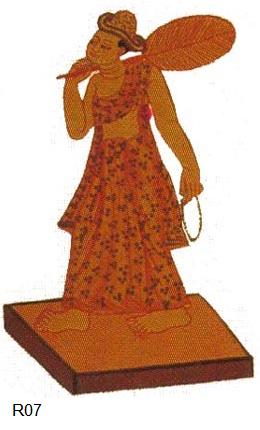
R>Wikipedia: {rhing-tau} - was a young novice monk of Innwa and died of a snake bite. He is
portrayed standing on a pedestal with headwear, and a yellow robe. He holds a
fan in his right hand and rosary beads in his left.[8]
wiki08 ^ a
b
c
d
e
f
g
h
i
j
k
l
m
n
o
p
q
r
s
t
u
v
w
x
y
z
aa
ab
ac
ad
ae
af
ag
ah
Hla Tha Mein. "Thirty-Seven
Nats". Yangonow. Retrieved on
2006-07-03.
Dr. Htin Aung
32. Lord Novice
U Po Kya
32. {rhing-tau nat}
 <L
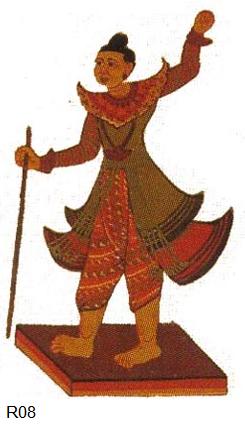
<LWikipedia: {Ñaung-hkying:o} - a descendant of the captive King Manuha of
Thaton in Bagan.
He died of leprosy during the reign of King Anawrahta. He is portrayed standing
on a pedestal with a topknot, his left hand raised and holding a staff in his
right.[7][8]
wiki07 ^ a
b
c
d
e
f
g
h
i
DeCaroli, Robert (2004).
Haunting the Buddha: Indian Popular Religions and the Formation of Buddhism.
Oxford Univ Press, US. Retrieved on
2008-09-13.
wiki08 ^ a
b
c
d
e
f
g
h
i
j
k
l
m
n
o
p
q
r
s
t
u
v
w
x
y
z
aa
ab
ac
ad
ae
af
ag
ah
Hla Tha Mein. "Thirty-Seven
Nats". Yangonow. Retrieved on
2006-07-03.
Dr. Htin Aung 16. Old Man by the Solitary Banyan Tree
U Po Kya
16. {Ñaung-hkying:o}
 R>
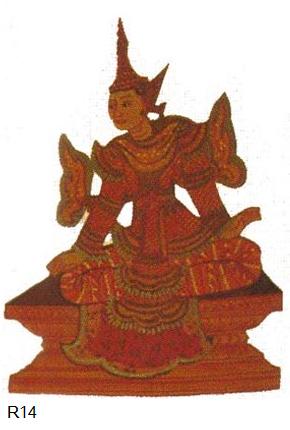
R>Wikipedia: {ta.ping-rhwé-hti} - King of Taungoo (1512-1550), became a drunk and was assassinated by a servant. He is
portrayed sitting crosslegged on a throne in full regalia, sword in left hand
and right hand on his knee.[8]
wiki08 ^ a
b
c
d
e
f
g
h
i
j
k
l
m
n
o
p
q
r
s
t
u
v
w
x
y
z
aa
ab
ac
ad
ae
af
ag
ah
Hla Tha Mein. "Thirty-Seven
Nats". Yangonow. Retrieved on
2006-07-03.
Dr. Htin Aung
33. Tabinshwehti
U Po Kya
33. {ta.ping-rhwé-hti:}
 <L
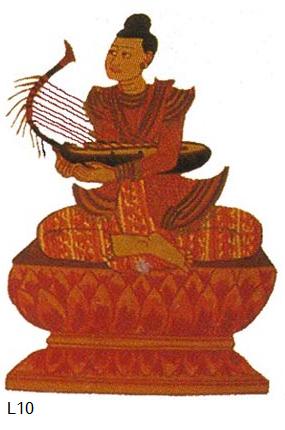
<LWikipedia: {ming:rè:aung-ting} - husband of Princess Shwe Sin Tu, daughter of King Thar
Sun of Innwa and his queen, who was daughter of
Sawbwa of
Monè in
Shan State.
He died from an excess of opium smoking. He is portrayed sitting on a pedestal
with a topknot and holding a harp.[8]
wiki08 ^ a
b
c
d
e
f
g
h
i
j
k
l
m
n
o
p
q
r
s
t
u
v
w
x
y
z
aa
ab
ac
ad
ae
af
ag
ah
Hla Tha Mein. "Thirty-Seven
Nats". Yangonow. Retrieved on
2006-07-03.
Dr. Htin Aung
30. Valiant Lord Aung Din
U Po Kya
30. {min:rè:aung-ting}
Wikipedia: {rhwé-sic-ping} - (no description given - one of the last to be identified.)
Dr. Hting Aung 21. Royal Cadet
U Po Kya
21. {rhwé-sic-thing}
 <L
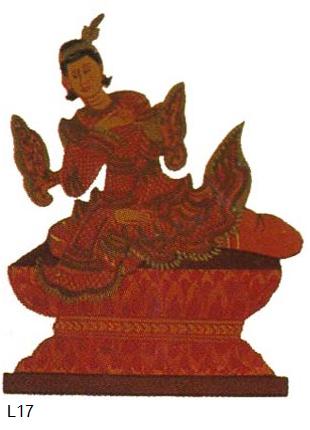
<LWikipedia: {mèý-tau rhwé-sän-ka:} - the mother of Shwe Sitpin, she died of heartbreak over
the sorrowful plight of her son. She is portrayed sitting on a pedestal with her
right hand on her bosom and her left hand resting on her lap.[8]
wiki08 ^ a
b
c
d
e
f
g
h
i
j
k
l
m
n
o
p
q
r
s
t
u
v
w
x
y
z
aa
ab
ac
ad
ae
af
ag
ah
Hla Tha Mein. "Thirty-Seven
Nats". Yangonow. Retrieved on
2006-07-03.
Dr. Htin Aung
22. His [Royal Cadet] Mother, the Lady Golden Words
U Po Kya
22. {mèý-tau rhwé-sa.ka:}
 R>
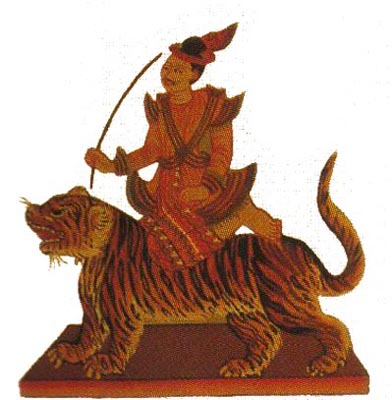
R>Wikipedia: {maung hpo:tu} - a tea
trader during the reign of King Minkhaung of Innwa, was killed by a tiger on his
way to
Shan state. He is portrayed sitting on a tiger, a stick in right hand and
left hand on his thigh.[8]
wiki08 ^ a
b
c
d
e
f
g
h
i
j
k
l
m
n
o
p
q
r
s
t
u
v
w
x
y
z
aa
ab
ac
ad
ae
af
ag
ah
Hla Tha Mein. "Thirty-Seven
Nats". Yangonow. Retrieved on
2006-07-03.
Dr. Htin Aung
25. Maung Po Tu
U Po Kya
25. {maung-po:tu}
 <L
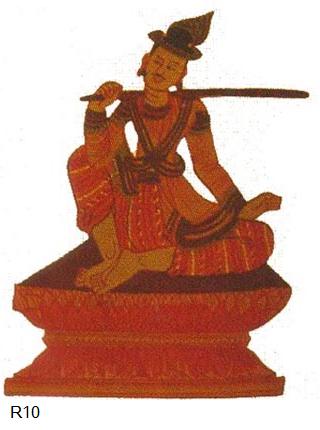
<LWikipedia: {ywan: Bu.ring} - (King of
the Yun)
was Mekuti, the captive king of
Chiang Mai,
who died of illness during the reign of King
Bayinnaung
of Hanthawaddy
(1551-1581). He is portrayed sitting with right knee raised, right hand holding
a sheathed sword across the shoulder, and left hand on left knee.[8][11][12]
wiki08 ^ a
b
c
d
e
f
g
h
i
j
k
l
m
n
o
p
q
r
s
t
u
v
w
x
y
z
aa
ab
ac
ad
ae
af
ag
ah
Hla Tha Mein. "Thirty-Seven
Nats". Yangonow. Retrieved on
2006-07-03.
wiki11 ^ Forbes, Andrew
(2005).
"King
Mae Ku: From Lan Na Monarch to Burmese Nat". CPAmedia. Retrieved on
2008-09-12.
wiki12 ^ Barlow, Joel John.
"History
of Lanna - Burmese Rule and Other Foreign Influence".
Chiang Rai
Province.com. Retrieved on
2008-09-14.
Dr. Htin Aung
37. King of Chiengmai
U Po Kya
37. {ywan: Bu.ring}
Wikipedia: {maung ming:hpru} - (no description given - one of the last to be identified.)
Dr. Htin Aung
31. Young Lord White
U Po Kya
31. {maung-ming:hpru}
 <L
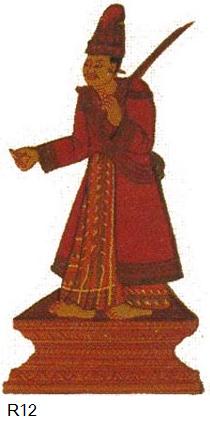
<LWikipedia: {man~ta.lé: Bo:tau} - (Lord Grandfather of
Mandalay),
son of a Brahmin,
he was killed for not properly supervising Shwe Hpyin Naungdaw and Shwe Hpyin
Nyidaw, who were negligent in their duties.[7][8]
He is portrayed standing on a pedestal with a sword on his shoulder and a hand
raised, pointing his finger.[8]
wiki07 ^ a
b
c
d
e
f
g
h
i
DeCaroli, Robert (2004).
Haunting the Buddha: Indian Popular Religions and the Formation of Buddhism.
Oxford Univ. Press, US. Retrieved on
2008-09-13.
wiki08 ^ a
b
c
d
e
f
g
h
i
j
k
l
m
n
o
p
q
r
s
t
u
v
w
x
y
z
aa
ab
ac
ad
ae
af
ag
ah
Hla Tha Mein. "Thirty-Seven
Nats". Yangonow. Retrieved on
2006-07-03.
Dr. Htin Aung
14. Lord Grandfather of Mandalay
U Po Kya
14. {man~ta.lé: Bo:tau}
Wikipedia: {rhwé-hpiñ:naugn-tau} - (Inferior Gold the Elder), also called Shwe Hpyin Gyi or Min Gyi, and
Dr. Htin Aung
12. Elder Inferior Gold
U Po Kya
12. {rhwé-hpyiñ:kri:}
Wikipedia: {rhwé-hpiñ:Ñi-tau} - (Inferior Gold the Younger), also called Shwe Hpyin Nge
or Min Lay, together known as Shwe Hpyin Nyinaung (Brothers) or Taungbyone Min
Nyinaung (Brother Lords), were sons of Byatta, the royal messenger, and Me Wunna,
a flower-eating ogress from Mt Popa, during the reign of King Anawrahta of Bagan.
They were killed for neglecting their duty to provide a brick each thus leaving
gaps in Taungbyone Pagoda, which was built by King Anawrahta.
[6][7]
They are portrayed on pedestals, one lying down and the other upright with his
sword shouldered arrogantly.[8]
Me Wunna died of a broken heart after Byatta was killed and later their sons
were taken away on the king's orders. She became a nat known as Popa Medaw
(Mother of Popa).[3]
wiki03 ^ a
b
c
d
Spiro, Melford E (1996).
Burmese Spiritualism. Transaction Publishers.
Retrieved on 2008-09-15.
wiki06 ^ a
b
Shwe Mann Maung. "The
Taung Byone Nat Festival". Perspective (August 1997). Retrieved on
2008-09-11.
wiki07 ^ a
b
c
d
e
f
g
h
i
DeCaroli, Robert (2004).
Haunting the Buddha: Indian Popular Religions and the Formation of Buddhism.
Oxford Univ., US. Retrieved on
2008-09-13.
wiki08 ^ a
b
c
d
e
f
g
h
i
j
k
l
m
n
o
p
q
r
s
t
u
v
w
x
y
z
aa
ab
ac
ad
ae
af
ag
ah
Hla Tha Mein. "Thirty-Seven
Nats". Yangonow. Retrieved on
2006-07-03.
Dr. Htin Aung
13. Younger Inferior Gold
U Po Kya
13. {rhwé-hpriñ:ngè}
Wikipedia: {ming:tha maung-rhing} - (no description given - one of the last to be identified.)
Wikipedia: {hti:hpru-hsaung:} - (Lord
of the White Umbrella) was King Kyaungbyu, father of Anawrahta.[7][8]
He was deposed and forced to become a monk by his stepsons, and died later.[8]
wiki07 ^ a
b
c
d
e
f
g
h
i
DeCaroli, Robert (2004).
Haunting the Buddha: Indian Popular Religions and the Formation of Buddhism.
Oxford Univ. Press, US. Retrieved on
2008-09-13.
wiki08 ^ a
b
c
d
e
f
g
h
i
j
k
l
m
n
o
p
q
r
s
t
u
v
w
x
y
z
aa
ab
ac
ad
ae
af
ag
ah
Hla Tha Mein. "Thirty-Seven
Nats". Yangonow. Retrieved on
2006-07-03.
Dr. Htin Aung
09. Lord with the White Umbrella
U Po Kya
09. {hti:hpru-hsaung:}
Wikipedia: {hti:hpru-hsaung: mèý-tau} - (Royal Mother of Htibyusaung), grandmother of Anawrahta, died of illness.[7][8]
She is portrayed with hair knotted and dangling, sitting on folded knees with
hand on her lap.[8]
wiki08 ^ a
b
c
d
e
f
g
h
i
j
k
l
m
n
o
p
q
r
s
t
u
v
w
x
y
z
aa
ab
ac
ad
ae
af
ag
ah
Hla Tha Mein. "Thirty-Seven
Nats". Yangonow. Retrieved on
2006-07-03.
Dr. Htin Aung
10. Royal Mother (of No.9)
U Po Kya
10. {hti:hpru-hsaung: mèý-tau}
Wikipedia: {Bu.ring-ma. rhing ming:hkaung} - (no description given - one of the last to be identified.)
Wikipedia: {ming:sæÑ-thu} or {a.laung:sæÑ-thu} - King of Bagan (1112-1167), grandson and successor of King
Anawrahta was assassinated by his son
Narathu
(1167-1170) who usurped his throne. He is portrayed sitting on a throne with one
knee up and his foot on the seat, wearing royal garments.[8]
wiki08 ^ a
b
c
d
e
f
g
h
i
j
k
l
m
n
o
p
q
r
s
t
u
v
w
x
y
z
aa
ab
ac
ad
ae
af
ag
ah
Hla Tha Mein. "Thirty-Seven
Nats". Yangonow. Retrieved on
2006-07-03.
Dr. Hting Aung
17. Lord Sithu
U Po Kya
17. {ming:sæÑ-thu}
Wikipedia: {ming:kyau-swa} aka {U:ming:kyau} - he was the son of the Lord of
Pyay and Kuni Devi.
He was a drunkard, cock fighter, and excellent horseman. He was killed by the
(sic) devils who had been his victims.[8]
wiki08 ^ a
b
c
d
e
f
g
h
i
j
k
l
m
n
o
p
q
r
s
t
u
v
w
x
y
z
aa
ab
ac
ad
ae
af
ag
ah
Hla Tha Mein. "Thirty-Seven
Nats". Yangonow. Retrieved on
2006-07-03.
Dr. Htin Aung
19. Valiant Lord Kyawswa
U Po Kya
19. {kyau-swa}
 R>
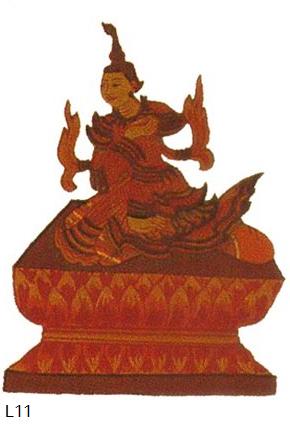
R>Wikipedia: {mrauk-hpak rhing-ma.} - (Lady of the North) was the wet nurse of King Tabinshwehti, and a native of
North Kadu. She died in childbirth. She is portrayed on her knees, right hand on
her bosom and left hand on her knee.[8]
wiki08 ^ a
b
c
d
e
f
g
h
i
j
k
l
m
n
o
p
q
r
s
t
u
v
w
x
y
z
aa
ab
ac
ad
ae
af
ag
ah
Hla Tha Mein. "Thirty-Seven
Nats". Yangonow. Retrieved on
2006-07-03.
Dr. Htin Aung
34. Lady of the North
U Po Kya
34. {mrauk-Bak rhing-ma}
 <L
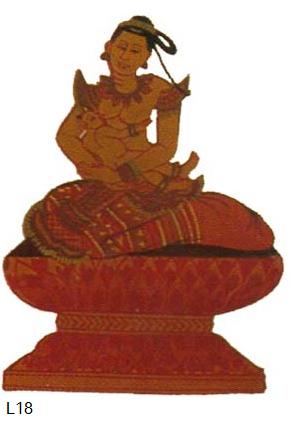
<LWikipedia: {a.nauk mi.Bu.ra:} - (Western Queen) was queen of King Minkhaung I of Innwa, daughter of
Shan chief Tho
Ngan Bwa, and mother of Min Yè Kyaw Zwa. She died of a heart attack after being
startled by seeing Min Kyaw Zwa (U Min Gyaw) on a magic stallion in a cotton
field. She is portrayed with a headdress sitting on a lotus and nursing her
baby.[8]
wiki08 ^ a
b
c
d
e
f
g
h
i
j
k
l
m
n
o
p
q
r
s
t
u
v
w
x
y
z
aa
ab
ac
ad
ae
af
ag
ah
Hla Tha Mein. "Thirty-Seven
Nats". Yangonow. Retrieved on
2006-07-03.
Dr. Htin Aung
26. Queen of the Western Palace
U Po Kya
26. {a.nauk-mi.hpu.ra:}
 R>
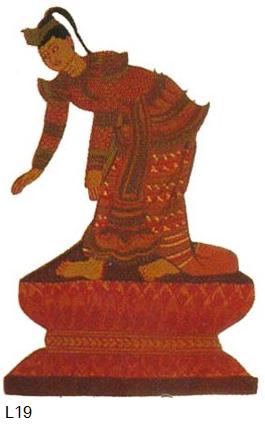
R>Wikipedia: {rhing-koan:} - (Lady Hump
Back) was a maid of King Thihathu , and accompanied him to the battlefront. She
died on her return to the capital. She is portrayed walking limply with her
hands dangling.[8]
wiki08 ^ a
b
c
d
e
f
g
h
i
j
k
l
m
n
o
p
q
r
s
t
u
v
w
x
y
z
aa
ab
ac
ad
ae
af
ag
ah
Hla Tha Mein. "Thirty-Seven
Nats". Yangonow. Retrieved on
2006-07-03.
Dr. Htin Aung
28. Lady Bent or Lady Hunchback
U Po Kya
28. {rhin-koan:}
 <L
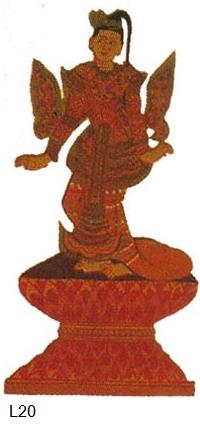
<LWikipedia: {rhing-kwa.} - (Lady Bandy Legs) was the sister of Mandalay Bodaw, and killed
together with her brother for hiding the brothers Shwe Hpyin.[7][8]
wiki07 ^ a
b
c
d
e
f
g
h
i
DeCaroli, Robert (2004).
Haunting the Buddha: Indian Popular Religions and the Formation of Buddhism.
Oxford Univ. Press, US. Retrieved on
2008-09-13.
wiki08 ^ a
b
c
d
e
f
g
h
i
j
k
l
m
n
o
p
q
r
s
t
u
v
w
x
y
z
aa
ab
ac
ad
ae
af
ag
ah
Hla Tha Mein. "Thirty-Seven
Nats". Yangonow. Retrieved on
2006-07-03.
Dr. Htin Aung
15. Lady Bandy-Legs
U Po Kya
15. {rhing-kwa.}
 R>
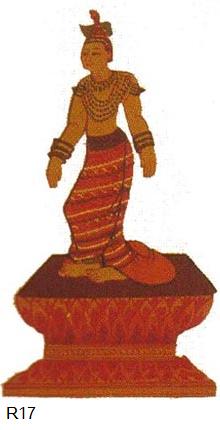
R>Wikipedia: {rhing-nè:mi.} - (no description given - one of the last to be identified.)
Dr. Htin Aung 06. Little Lady with the Flute
U Po Kya 06. {ma.nè:mi.}
U Po Kya described the image as: standing on lotus-throne-platform,
a child figure, {si:poän} on head, belt on waist, bead bangles on both hands
which were hanging down.
wiki01 ^ Braun, Kelly (January 15, 2001). "Syncretism in Burma and Thailand". Axis Mundi, University of Alberta. Retrieved on 2008-09-15.
wiki02 ^ a b c Brac de la Perriere, Benedicte. "The Spirit-possession Cult in the Burmese Religion". dhammaweb.net. Retrieved on 2008-09-14.
wiki03 ^ a b c d Spiro, Melford E (1996). Burmese Spiritualism. Transaction Publishers. Retrieved on 2008-09-15.
wiki04 ^ Dr Sein Tu. "Traditional Myanmar Folk Beliefs and Forest and Wildlife Conservation". Perspective (January 1999). Retrieved on 2008-09-13.
wiki05 ^ a b c Maung Htin Aung (February 1958). "Folk-Elements in Burmese Buddhism". The Atlantic. Retrieved on 2008-09-11.
wiki06 ^ a b Shwe Mann Maung. "The Taung Byone Nat Festival". Perspective (August 1997). Retrieved on 2008-09-11.
wiki07 ^ a b c d e f g h i DeCaroli, Robert (2004). Haunting the Buddha: Indian Popular Religions and the Formation of Buddhism. Oxford University Press, US. Retrieved on 2008-09-13.
wiki08 ^ a b c d e f g h i j k l m n o p q r s t u v w x y z aa ab ac ad ae af ag ah Hla Tha Mein. "Thirty-Seven Nats". Yangonow. Retrieved on 2006-07-03.
wiki09 ^ a b "Sacred Mount Popa". MRTV3. Retrieved on 2008-09-13.
wiki10 ^ Dr Khin Maung Nyunt. "The Equestrian Festival". myanmars.net. Retrieved on 2008-09-11.
wiki11 ^ Forbes, Andrew (2005). "King Mae Ku: From Lan Na Monarch to Burmese Nat". CPAmedia. Retrieved on 2008-09-12.
wiki12 ^ Barlow, Joel John. "History of Lanna - Burmese Rule and Other Foreign Influence". Chiang Rai Province.com. Retrieved on 2008-09-14.
End of TIL file