The Burmese Weikzas
weikza.htm (fn01b)
John P. Ferguson and E. Michael Mendelson, Contributions to Asian Studies,
Vol. XVI, p062
in Essays on Burma by John P. Ferguson, Brill Archive, 1981,
ISBN 9004063234, 9789004063235, 167 pages
http://books.google.ca/books?id=Ug4VAAAAIAAJ&dq=treasure+guardian+Burma&source=gbs_summary_s&cad=0
080924
Set in HTML by the staff of TIL and edited by U Kyaw Tun, M.S. (I.P.S.T., U.S.A.). Not for sale. Prepared for students of TIL Computing and Language Center, Yangon, MYANMAR.
John P. Ferguson, State University of New York, Cobleskill, U.S.A.
E. Michael Mendelson, School of Oriental Studies, London, U.K.
UKT: The title may be misleading. The "Weikza" that the authors are describing is not necessarily a weikza
{waiz~za) but what might be termed a Bodaw {Bo:dau:} dressed either in white as a layman or in dark brown robes as a
{ra.thé.}. However, to bring ourselves out the mess with terms used in Burma (as of the year 2008), it is recommended that the reader should acquaint himself with brief biographies of the known historical personages (meaning those who were born humans and who had undergone Assumption (cf. Christian idea of Virgin Mary being taken into Heaven).
The original paper which I downloaded from the Internet was a preview of the book. It gave only part of the Introduction, p.62-71. So far, I haven't seen the original book. -- UKT
Preface (part)
Introduction
Amadaw Gaing
UKT notes
• {tha.ma.hta.} and {wi.pa.tha.na}
• {ag~gi.rat} and {ing:}
• {htwak-rûp-pauk}
• {a.htak lam:} and {auk lam:}
Brief biographies (based on known facts but tainted
with speculation and hearsays)
• BoBo Aung
• Bo Aung Min Gaung
Contents of this page
p.roman10
by John P. Ferguson, State University of New York, Cobleskill, U.S.A.
UKT: I have taken only the part relevant to this paper.
The essay on weikzas
{waiz~za} brings together a mass of data acquired by both the authors. Mendelson
has already published a number of articles on what he has called "messianic"
Buddhism, but he had actually planned a full-length work on the gaings
 {geiN:}
that would delve much more deeply into the mysterious and little known world of
the Buddhist occult. When Mendelson left the field of active Burmese research,
he most generously allowed me to use his notes, translations, photographs, and
books. Adding these to my own data, I was able to construct the tentative essay
included here. Clearly, the historical roots of Burmese occultism need much more
research, but the paper at least explores some directions that might be
profitable. The reader will also note that the [{p.roman10end}] essay
does little to resolve the theoretical differences between our friend Melford
Spiro and the co-authors. One might see the differences epitomized in how one
deals with a monk who dabbles with the occult to alleviate suffering. We would
see him as a Buddhist monk doing a forbidden, but not all-that-uncommon, thing.
Spiro would not see a monk, but an exorcist, since monks are denied by precept
the exercise of occult powers. We like to think in terms of a continuum of
Buddhist practice and ideals; Spiro prefers to define Buddhism as not including
the forbidden. It is a worthwhile debate on the nature of religion, not likely
to be resolved easily.
{geiN:}
that would delve much more deeply into the mysterious and little known world of
the Buddhist occult. When Mendelson left the field of active Burmese research,
he most generously allowed me to use his notes, translations, photographs, and
books. Adding these to my own data, I was able to construct the tentative essay
included here. Clearly, the historical roots of Burmese occultism need much more
research, but the paper at least explores some directions that might be
profitable. The reader will also note that the [{p.roman10end}] essay
does little to resolve the theoretical differences between our friend Melford
Spiro and the co-authors. One might see the differences epitomized in how one
deals with a monk who dabbles with the occult to alleviate suffering. We would
see him as a Buddhist monk doing a forbidden, but not all-that-uncommon, thing.
Spiro would not see a monk, but an exorcist, since monks are denied by precept
the exercise of occult powers. We like to think in terms of a continuum of
Buddhist practice and ideals; Spiro prefers to define Buddhism as not including
the forbidden. It is a worthwhile debate on the nature of religion, not likely
to be resolved easily.
UKT: The fundamental theoretical differences between Melford Spiro and the present authors simply boil down to how you define a monk. According to Theravada traditions, a person who has transgressed the Parazika rules of the Vinaya is no longer a monk, and according to one Parazika rule, a monk who practices the occult to show off his powers is no longer a monk. Whether the monk unavoidably has to exercise his powers while doing good for others or not is not an excuse. Since, Burma professes to be a Theravada country, a Burmese monk who dabbles in the occult is not a monk and is punishable by being disrobed. But the problem is solved for those "monks" who have undergone Assumption or
{htwak-rût-pauk} since his "body" is no longer flesh and blood of a living human being!
... ... ...
In Burma, as in much of Southeast Asia, apparent reality is ultimately explained as metaphor, understandable at various levels depending upon one's fascination with the unknown. For those who seek the esoteric, Burmese popular religion has a whole of metaphorical universe of the occult to explore.
A host of Burmese religious specialists exist to explain the hidden meanings and causation behind "reality". The most abstract and lofty explanations are found in the Pali scriptures of the Theravada Buddhist canon, with the monks the living teachers of the Buddha's enlightened wisdom, which is considered the ultimate authority. Because the monks of Burma, however, exist under no unified ecclesiastical hierarchy that could define orthodoxy, sects, splinter groups, and individual monks are quite free to interpret the Buddha's teachings with a latitude only limited by the tolerance of the laity who support and feed them. (fn02b)
Over the centuries, Burmese Buddhism, even under the strongest purifying kings, has tolerated an amazing degree of doctrinal variance, incorporating a number of Mahayanist, Sanskrit, Hinayana, and Tantric beliefs. Rather than exclude, Burmese Buddhism absorbs competing ideas but gives them a Theravada interpretation, if possible, and it places competing notions and symbols into a hierarchy, with Pali Theravada beliefs considered the highest insights.
Over the centuries this absorption process has preserved a great many ancient
beliefs and symbols that a more rigid religion would have rejected. Thus we can
find in Burma today old Hindu gods transformed into Buddhist higher nats or deva,
the ancient Hindu Mount Meru-centered cosmology inhabited now by Buddhist
beings, the Vedic lore of astrology and alchemy taught within a semi-Buddhist
framework, ancient deities of pre-Buddhist times such as the earth goddess, the
serpent of the deep, or animist nature spirits all harnessed to glorify Buddhism,
the Tantric and yogic austerities of the Tibetan hermits adapted to Buddhist
forest monk practices, the concept of living, compassionate Bodhisattas
translated into special arahats who delay their extinction in Nirvana [UKT: The
Westerner always equate Nirvana with "extinction" little understanding that to
the Buddhists this equating is a heresy in itself. My explanation of Nirvana
is a state of mind that is free from "Greed", "Anger",
"Sex" and "Pride" which is
beyond the understanding of the uninitiated who is still chained to the idea of
the indestructibility of something postulated as the indestructible "Soul"
which has no scientific basis.] in order to help the faithful today,
or even the most terrifying forms of white and black
magic still taught under the umbrella of popular Buddhism.
(fn03b).
[{p062end}] Quite at home in this amalgam of belief
is the master of the Burmese occult, the weikza (wei'za)
{waiz~za}.
(fn04b)
UKT: The word "weikza"
{a.htak lam:}, in which case he is a
{auk-lam:}, he or she is a
{ka.wé}.
Many in the West would restrict the term weikza to mythical beings who in popular belief are the subject of much fanciful literature and conversation but who do not exist in this world apart from the enthusiastic imaginations of the folk. In this paper we shall deal first with the idea of a weikza and then explain how there are real individuals whom others believe are actualizations of the idea. The concepts that center around the role of a weikza are very complex, and it is not easy to define such a being, separating him from others with supranormal powers.
UKT: One should not assume that a Burmese Buddhist monk with all the goodness in his heart would follow only the higher path,
Basically a weikza is conceived as a human who has acquired supranormal powers through mastery of alchemy, astrology, spells, signs, meditation, or other occult arts. He is always male, and his knowledge is often acquired from a "master" in a strict teacher-pupil relationship. Sometimes, through a mysterious process, the spirit of another weikza inhabits him or "elects" him (his own soul or spirit temporarily is sent elsewhere). Once a person has acquired weikza knowledge, he can then postpone his soul's final extinction for thousands of years, he can leave his body and use another's, he can remain indefinitely youthful in appearance, he can cure and divine, he can speak many tongues, he can fly in the air to foreign lands or travel through the earth to realms below, and, most importantly, he can command and control a host of lesser gods and dangerous spirits that plague the human condition. (fn05b)
Before dealing with the weikza's historical evolution or his links with normative Buddhism, we should point out that all his unusual powers are unique to his role. In Burmese belief, unusual powers can theoretically be developed by many people. Since Theravada Buddhist thinking reserves the highest prestige in the entire cosmology for the human beings who best exemplify the teachings of the Buddha, who himself was entirely human, it follows logically that their gods, demons, spirits, witches, and so forth, no matter what powers such beings possess, can all be outdone by the perfected human beings, the Buddhas, or by those holy monks who are most like him in thought and deed. Humans can acquire unusual powers through meditation, alchemy, astrology, charms and medicines, recitation of Buddhist prayers over a rosary, or living a pure life and using it as a "vow of truth" to accomplish the miraculous. Orthodox belief, however, always eschews the use of any such powers that the less scrupulous might be tempted to test. Humans may be aided or harmed in miraculous ways by gods, spirits, or other non-human beings. In most cases, however, the acquisition or miraculous powers is directly proportional to one's progress in becoming a good Buddhist. Miraculous power without Buddhism is believed to cause insanity or death. Most Burmese who embark upon the quest for miraculous power consequently do so within the broad sanctions of Buddhism. Even a layman seeking a charm to win at poker must observe some additional Buddhist precepts if expects results. A would-be weikza must exist within the same framework.
To understand clearly the role of the weikza in Burma, one must determine how the role lays claim to miraculous power that differs in any way [{p063end}] powers attributed to others. Since the Buddhist monk is the society's exemplar, we shall begin with distinguishing weikza powers from those attributed to monks.
The critical difference is found to center around the concept of rebirth. Even the best of monks - the arahat - can aspire only to final release from further rebirths in this human world of sensual attachment and eventual suffering. The personal "soul" of such a monk becomes extinct, according to traditional thought, at his death, with his karmic forces producing no new attachment or debts to this world. The arahat is free at last to enter the higher heavens or Nirvana itself, never to return. ¶UKT.
UKT: The last sentence "The arahat is free at last to enter the higher heavens or Nirvana itself, never to return" is doctrinally wrong. The authors failed to understand that the idea of "soul" or Atta is nothing but an axiom. In actuality, when this axiom is removed (in accordance with the Principle of Anatta), then the idea of "rebirth" breaks down. For a person to accept or realize that his idea of "Self" is nothing but an illusion (axiom) is the key to "Final Liberation", and what lies beyond his physical death is best treated as unknown. However, instead of getting into such a dead-end, it is best to realize that: Every sentient being is not free from "mental suffering" (The Principle of Suffering); Suffering is the result of a person's attachment to an idea or an axiom such as Soul (The Principle of Attachment); and Removing the idea or axiom is Liberation (The Principle of Nirvana).
For the average monk, a few or many more rebirths will be necessary. In other words, final release, even for monks will take a long time - a much longer time for the laity, no matter how much Buddhist merit in this life they earn by generously supporting the religion. ¶UKT.
UKT: The statement, "a much longer time for the laity, no matter how much Buddhist merit in this life they earn by generously supporting the religion" is how a "non-Buddhist foreigner" would look at "doing good work" or
{ku.thol}. There are three kinds:
{da-na.} (giving away material wealth or money especially to the monks);
{thi-la.} (morality); and
{Ba-wa.na}.
{tha.ma.hta.} and "deep analysis"
{wi.path~tha.na}. It is only by deep analysis that we can realize that the very idea of Self is without any physical basis and is therefore an axiom, the removal of which would make you realize Nirvana.
Therefore, a person aspiring to become a weikza has to do more
The weikza, it would seem, seeks a shorter path to final release. In essence, he hopes to keep his soul or personal identity while his countrymen lose theirs at death. He hopes to manipulate his rebirths himself, taking matters out of the hands of karmic reckoning. Most importantly, he hopes to schedule his rebirths or extend his present life so that he is here on earth at the same time the next Buddha arrives, popular belief asserting that all who hear the next Buddha preach will have the opportunity to attain Nirvana at once. (fn06b)
At a glance it is obvious that such attempts to prolong individual identity fly in the face of fundamental Theravada warnings that the self is an illusion and cannot survive death. ¶UKT
UKT: At the time of physical death, all five aggregates are dissolved. By five aggregates are meant the physical body (which is an aggregate of many parts which in modern terms are millions of individual living cells), and four mental aggregates. All the four aggregates dissolve at the time of physical death, but one of the mental aggregate - the
{wi.Ñaañ} or
{waiñ~ñaañ} (sp.check required) because of the yearning for a new existence
{Ba.wa.ta.Nha} resulted in the appearance of five new aggregates. This idea is not the same as a permanent Soul seeking a new "body" at the time of death which is what "reincarnation" means. To me, at least, the idea of "reincarnation" is unacceptable.
Popular belief, however, has long included the notion of rewards in heavens or punishments after death as occurring to individuals not impersonal bundles of karmic consequences. Nats, of course, seem to retain their personal identity over centuries, and some who are critical of nats doubt that many still exist because they have passed on to another birth (Mendelson 1963a: 98-105). ¶UKT
UKT: Though deva
{dé-wa.} and
{nat-saim:} are generally described as "Nats", they are fundamentally different. By "nat"
{nat}, the authors seem to mean {nat-saim:}]. This concept of nat should be compared to the Tibetan idea of the Bardo. See "The Tibetan Buddhist and Spiritualist Views of After-death States" http://www.spiritualtravel.org/OBE/afterdeath.html 080930, or in The Tibetan Book of the Dead.
Furthermore, popular Buddhism has elaborated belief in certain arahats, such as Shin Thiwali (see Figure 1), Uppagou, or Kassapa, who have earned but not accepted Nirvana and thus remain as guardians or supporters of the religion to whom the people can turn for help (Ferguson 1977b). Weikzas can and do borrow a similar role for themselves as guardians and helpers of the religion, thereby giving an altruistic purpose to what otherwise might be seen as an egotistic quest. Weikzas in the sky are said to be able to transmit promptings and messages to the faithful on earth - all for the ostensible purpose of promoting the religion. The weikza consequently claims a control over rebirth that gives him powers only attributed to a handful of monks in all of history. The Mahayanist Bodhisatta aspect of his claimed powers is quite evident (fn07b)
Other weikza powers, such as flying, curing, and providing protection from evil
spirits, may be attributed to non-arabat monks by their ardent followers,
despite the fact that the Buddha prohibited monks themselves from claiming such
talents. The more charismatic and saintly the monk, the more his followers
attribute miraculous abilities to him. Stories of his magical flying will be
told; he will be expected to dispense charms of all kinds; and he will be asked
to aid the people in ridding their environment of evil forces. Particularly [{p064end}]
common targets of such intense popular expectations are solitary forest monks,
meditating monks, and those skilled in alchemy, astrology, and/or folk medicine.
Despite the injunctions of the Vinaya [UKT: the monastic code laid down by the
Buddha himself for a monk to follow if he were to be a member of the society of
monks known as Sangha
 {thän~Ga}), many monks cater to such needs of the people.
The main difference between the monk and the weikza in these areas
is that whereas a monk must be modest, dignified,
and somewhat discreet in using what powers he has, the weikza can proudly claim
to have all such powers and quite openly publicize them to the world. The monk
must remain within the range of tolerated behavior for members of the order,
whereas is more like the independent being who charts his own course,
no matter how eccentric and flamboyant it may become.
(fn08b)
{thän~Ga}), many monks cater to such needs of the people.
The main difference between the monk and the weikza in these areas
is that whereas a monk must be modest, dignified,
and somewhat discreet in using what powers he has, the weikza can proudly claim
to have all such powers and quite openly publicize them to the world. The monk
must remain within the range of tolerated behavior for members of the order,
whereas is more like the independent being who charts his own course,
no matter how eccentric and flamboyant it may become.
(fn08b)
UKT: The above phrase "The main difference between the monk and the weikza" is misleading, because "weikza" is a state.
To elaborate, consider a human being of flesh and blood. By taking certain vows he can enter the society of monks, and he is said to have become a monk. His body is still flesh and blood. His body still needs nourishment and sleep. He is a "human-monk". However, if he would choose to practice certain tasks, and become successful, his body of flesh and blood undergoes transformation and no longer needs nourishment nor sleep. That is the weikza state. Then he is a monk-weikza or weikza-monk.
On the other hand, if the human had not enter the monkhood (i.e., remain a lay-person), but chose to practice the tasks prescribed and became successful, his body of flesh and blood undergoes transformation and enters the weikza state. Then he is a lay-weikza or a human-weikza.
In cases of weikza-monk and human-monk, being a monk means he must be modest, and must not declare that he is weikza. However, in the case of the lay-weikza, he can proudly claim that he is a weikza.
Most importantly, the weikza [i.e. a lay-weikza] can orchestrate his bid for followers in a pragmatic way that allows him much more freedom than is available to a monastery-bound monk who is required to observe the demanding rules of the Vinaya. What is compulsory abstinence for the monk is voluntary for the weikza. A weikza [i.e. a lay-weikza] can have a wife but renounce sex , or he can keep as many Buddhist precepts as fit his life style; he can travel where he wishes, eat when and what he pleases, or handle money as he wishes. ¶UKT
UKT: A married person while following the
The monk [i.e. monk-weikza] has to live a much more constricted life style, making it more difficult to attract and nurture a following. In other words, the monk exists within a monastic framework that is 2,500 years old, whereas the weikza [i.e. human-weikza] is, significantly, quite free of such traditions and can tail his life style, his symbolic paraphernalia, and the construction of his cult centers to fit the expectations of his clientele. The weikza, then is ultimately a layman who lays claim to the miraculous powers of an arahat but who can be ecclectic in how many of the monk's rules he observes. There is also a tendency for the weikza of today to make a conspicuous virtue of austerities normally taken for granted when practiced by monks. (fn09b).
If we compare the weikza's role and reputed powers with other Burmese religious
practitioners, we find that basically he claims superior ranking in the
hierarchy of such roles and has reputed powers that supersede or equal those of
his rivals. The practitioner most often thought of as most similar to a weikza
is a zawgyi (zo:gyi)
 {zau-gyi}; long known to the Burmese public as a
dramatic personage in theater presentations (pwes) or in puppet shows.
Believed to a Burmese version of the Indian yogi, the zawgyi is generally
conceived as a red-robed master of occult practices, particularly alchemy and
charms, who uses his powers for non-Buddhist ends, such as obtaining women.
Conventionally the zawgyi is portrayed as respecting the Buddha, although it is
clear what does specifically to promote the faith. The zawgyi is frequently a
scape-goat for anti-yogic sentiment. A popular figure in literature, dance and
theater, iconography, and popular tales, the zawgyi does not seem to be a role
seriously assumed by any living Burmese religious practitioners (see Figures 1
and 2). In any case, whatever a zawgyi can be said to do, a weikza can be said
to do better, although skeptical monks may dismiss
both as fatally fascinated by the female.
(fn10b)
{zau-gyi}; long known to the Burmese public as a
dramatic personage in theater presentations (pwes) or in puppet shows.
Believed to a Burmese version of the Indian yogi, the zawgyi is generally
conceived as a red-robed master of occult practices, particularly alchemy and
charms, who uses his powers for non-Buddhist ends, such as obtaining women.
Conventionally the zawgyi is portrayed as respecting the Buddha, although it is
clear what does specifically to promote the faith. The zawgyi is frequently a
scape-goat for anti-yogic sentiment. A popular figure in literature, dance and
theater, iconography, and popular tales, the zawgyi does not seem to be a role
seriously assumed by any living Burmese religious practitioners (see Figures 1
and 2). In any case, whatever a zawgyi can be said to do, a weikza can be said
to do better, although skeptical monks may dismiss
both as fatally fascinated by the female.
(fn10b)
Much more evident in Burma are the hermits, whose history parallels that of the monks. Dressed in robes that range from brown to dark [{p065end}] red, holding beads, bowl, and cane, sometimes beating a brass triangular gong, they are seen both at popular religious pilgrimage centers and in lonely forest or mountain retreats. (fn11b). They are virtually an unstudied aspect of Burmese religion, either by the Burmese themselves or by outside scholars. Often found near forest monasteries, their solitary existence in nature makes them seem rather special and esoteric, with many people attributing to them special powers in alchemy, astrology, medicines, or, particularly Vedic magic (see Figures 1, 2, 3, and 4). Most keep eight to ten of the Buddhist precepts and often provide menial services to monks and nuns, some working actively as mediums for various weikzas. Hermits are particularly evident at the more esoteric weikza and monastic centers, seemingly attracted to the realms where the miraculous is believed most like to occur. They seen to serve rather than to compete with weikzas, but our knowledge of their role is admittedly most incomplete.
Much more competitive with weikzas and better known to all observers of Burma
are the various lay sayas (masters of various arts), that exist all over
Burma. Usually a saya (hsa.ya)
 {hsa.ra} will be expert in one field, such as
traditional medicine or astrology, but a few master a combination of skills,
thereby increasing their access to miraculous powers.
(fn12b).
As curers, diviners, and exorcists, they play vital roles in helping the Burmese
people deal with their problems. Depending upon the degree of their successes,
their their fame will be restricted to a village or can spread over a wide area
that includes many ardent followers. The more successful ones may make a bid for
weikza status. Most, however, remain well within the range of traditional
semi-Buddhist practices, keeping their rituals close to accepted Theravada
expectations. Since they do claim the powers to control nats and lesser spirits,
they depend upon respect for such expertise to accomplish much of their work,
particularly in exorcising, although they traditionally defer to monks in
difficult cases. The sayas thus are the most serious rivals to the weikzas,
particularly since they work more comfortably within the established Buddhist
framework, and their claims to power are basically more modest.
In many ways, the weikza can be conceived as a master saya.
{hsa.ra} will be expert in one field, such as
traditional medicine or astrology, but a few master a combination of skills,
thereby increasing their access to miraculous powers.
(fn12b).
As curers, diviners, and exorcists, they play vital roles in helping the Burmese
people deal with their problems. Depending upon the degree of their successes,
their their fame will be restricted to a village or can spread over a wide area
that includes many ardent followers. The more successful ones may make a bid for
weikza status. Most, however, remain well within the range of traditional
semi-Buddhist practices, keeping their rituals close to accepted Theravada
expectations. Since they do claim the powers to control nats and lesser spirits,
they depend upon respect for such expertise to accomplish much of their work,
particularly in exorcising, although they traditionally defer to monks in
difficult cases. The sayas thus are the most serious rivals to the weikzas,
particularly since they work more comfortably within the established Buddhist
framework, and their claims to power are basically more modest.
In many ways, the weikza can be conceived as a master saya.
This brief review of the weikza's rival religious practitioners is intended to illustrate the rather ambitious claims he makes for his powers and his place in the Buddhist world. The weikza has become associated, particularly in modern times, with more than religious matters. He also has been linked with various prophecies and traditions that relate to popular belief in the future king or world emperor. (fn13b)
Even though the last king of the Konbaung dynasty was dethroned by the British in 1885, many Burmese yearn for the restitution of the old ways. The dynasty itself was founded by Alaungpaya, who was catapulted to power on the belief of people in his native village that he was indeed the legendary strong man of Buddhist virtue who would lead the country to greatness. When the throne was his, he became known by a name that means "a being who will become a Buddha". Alaungpaya, in a sense, set the theme for the dynasty, [{p66end}] which was to be a fascination with the ancient dream of the world emperor who himself would also become the future Buddha. Alaungpaya chose as the leader of the Sangha a monk named Atula, who evidently was not adverse to giving the customary Buddhist sanction to such royal ambition. (fn14b)
It is quite possible that the origins of the modern beliefs in the weikzas are
to be found in the complex events that surround Alaungpaya and his leading monk
Atula. That possibility is suggested by some very interesting details on the
life of Bo Bo Aung given by a Burmese informant at Pagan. Bo Bo Aung (see
Figures 1, 5, and 6), perhaps the most famous of all the modern weikzas, was
said to have gone to school with two companions, U Wain, who later became King
Bodawpaya, and another schoolmate who became the Taungpila Sayadaw
 {taung-hpi-la hsa.ra-tau}, popularly
associated with teaching qin (qin:) {ing:} practices (the powers
of letters and numbers). ¶UKT
{taung-hpi-la hsa.ra-tau}, popularly
associated with teaching qin (qin:) {ing:} practices (the powers
of letters and numbers). ¶UKT
UKT: I have never heard
{ing:} (or rune) being described as qin (qin:) . It is this kind of "mistake" that I have in mind when I remark "This work is full of mistakes: I have included it, to show how a scholarly article can be misleading".
While the story is strangely silent on the role of the sayadaw, it relates how the king tries later to kill his old friend Bo Bo Aung when the latter becomes a powerful weikza. This same king, who was the son of Alaungpaya, disrobed and banished his father's monk, Atula, who traced his monastic pupil-teacher linage back to the Taungpila tradition at Sagaing. Furthermore Bo Bo Aung is said to have been a monk at Sagaing when he first discovered some powerful qin on a palmleaf manuscript. What these details suggest is that the Bo Bo Aung tradition evolves out a matrix at Sagaing, the traditional base of meditating forest monks and hermits, that could be related to King Bodawpaya's futile but dramatic bid to force the monkhood to recognize him as both the world emperor and the future Buddha. Because the monkhood refused to sanction Bodawpaya's bid to fuse the emperor and Buddha roles into his person, the king carried out a purge of the monkhood, including the disrobing of Atula. (fn15b).
UKT: The episode involving Sayadaw Atula is what is known as {a.roän - a.ting} controversy that was creating a split in the monk community known as Sangha. As this split was creating havoc in the lay community as well, the king had to step in and using his royal prerogative as the keeper of law and order, decided to declare the group headed by Atula as preaching the anti-Buddhist doctrine, i.e. {a.Dam~ma.}, and was causing a split among the Sangha. Since, according to the Viniya rules set down by the Buddha himself, a monk causing a split is punishable by being expelled from the society of monks, Atula was declared persona non grata and disrobed. He was stripped naked, put inside a cage on a raft, and a sign saying that there is an animal inside was put on the cage. The raft was floated down Irrawaddy from the capital, and stopped at every village and town and the population made to see the spectacle. On reaching the town of Thayetmyo, Atula was released and and banished into the forests of the western Yoma. Atula, even when naked, considered himself to be still a monk, simply put back on his robes and disappeared from civilization into the wilderness. (Facts to be checked with my peers.)
When Bagyidaw, the son of Bodawpaya, became king in 1819, he tried to pacify the badly splintered monkhood, even going so far as to appoint a thathanabaing (head of the Sangha) for the forest monks, who traditionally considered Sagaing as their stronghold (Pannasami 1861: 144). While Bagyidaw may have done much to unify the monkhood, he had to watch the loss of much of his country to the British by 1826, and popular hope began to center on Bagyidaw's son, who was known as the Setkya (Sa.ca) prince. ¶UKT
UKT: The time frame in history coincides with the American incursion into the British territory of Canada in what is known as the War of 1812-14. During this war an expeditionary force of Canadians and British made a flash landing in the US, sacked Washington D.C. and attacked the residence of the American president just before dinner time. The occupants fled, and the Canadians and the British ate the dinner, drank the wine, burnt down the residence and withdrew to their ships. The American came back during the night and whitewashed the building from which time onwards it is known as the White House, As the British were busy with the Americans and the French on the other side of the globe, they tried to made peace with the Burmese forces in Bengal. Then they started their first campaign, under Amherst the British Governor of Bengal, against the Burmese king: the First Anglo-Burmese War, made a flash landing in Rangoon, seized the Shwedagon Pagoda and turned it into a fort. They even made a go at the pagoda treasures by digging a tunnel into the interior of the pagoda but had to abandon it when their Mon allies complained. When the Burmese forces under General Bandoola came to face them, the Burmese could not attack the Shewedagon with their canons, but undaunted the Burmese rushed up the eastern stairs of pagoda with their swords. They suffered heavy losses, but managed to kill at least two British officers. Bandoola then had to retreat from Rangoon. He fell in battle, by letting himself be sniped at by a British gunner, in Danubyu, after which Bagyidaw had to declare defeat, handed a large amount of money and some of his territory to the British. (facts to be checked with my peers.)
Perhaps the Setkya would swoop out of Upper Burma and rout the enemy [that time the Mons] as Alaungpaya had done a few years before. All such hopes were dashed when Bagyidaw was overthrown by his brother Tharawaddy, and the young Setkya prince was done away with by his uncle, using the velvet sack into the river method so favored by the Burmese royalty. The populace thus lost their savior prince.
UKT: Why the velvet bag? It is believed that shedding the royal blood would bring down the dynasty, and therefore capital punishment for the royal is drowning. But since it is a member of the dynasty an ordinary sack would not do - it has to be made of velvet!
Tales soon developed, however, that the Setkya prince had not been drowned but had been rescued miraculously by Bo Bo Aung himself. ¶UKT
UKT: The reader is bound to get confused if he were to continue reading the following line casually. Bo Bo Aung had already become a weikza in the reign of Alaungpaya, and then there was the reign of Bagyidaw. It was only in the reign of Tharawaddy that Setkya prince was executed.
Bo Bo Aung had developed his weikza powers, left the monastery at Sagaing, put on the white clothes of a layman who keeps more than the usual Buddhist precepts, and had mastered the use of magic signs and letters (qin:) to obtain weikzahood. Using his weikza powers, Bo Bo Aung spirited the Setkya prince [{p067end}] to the heaven [UKT: what heaven?] where the future kings are said to bide their time before coming down to earth. The stage was thus set in popular belief for a host of future contenders for the title as Burma lost its independence to a colonial power. Just as the deadly use of royal power had created a host of nats in the history of Burma, King Tharawaddy's palace purge created a new focus of national belief - the faith in the Setkya prince who would soon come, and with the aid of a weikza, to deliver Burma into freedom and prosperity, perhaps soon to be followed by the coming of the future Buddha as well (see Figures 1 and 2). Some people, in their impatience, even fused the emperor-Buddha roles so that the Setkya prince was seen as the being who himself was also the future Buddha (Mendelson 1961a: 1961b). To accomplish all of this, the weikzas would use their magic powers, and in popular lithographic prints, Bo Bo Aung is seen crowning the future king.
Bitter national events followed the loss of the Sekya prince in 1937,
culminating in the humiliating deposition of King Thibaw in 1885 and the long
struggle for independence thereafter. During this century of struggle, the
Burmese people retained their faith in the coming king and the future Buddha.
Such faith was an elaboration upon Pali orthodox Buddhism to fit the needs of
wretched times. Some monks, as has been well documented, joined the populace in
belief in the messianic saviors (Mendelson 1975: 173-179, but enough of the
monkhood held to "orthodox" opinions so that the elaboration of a new
quasi-Buddhist weikza-emperor-future Buddha cult had to take place at the
periphery of normative Buddhism. Such developments occurred among the fringe
members of the Sangha, those who delved into forest austerities and occult
practices (alchemy, astrology, etc.) or who sought a quick route to Nirvana
through meditation. Joining such monks were the hermits and sayas of various
sorts. Groups of lay people (gaings or gain:)
{geiN:}
eagerly followed monks or lay masters who claimed varying supranormal powers,
most centered around faith in the weikzas, such as Bo Bo Aung, who would restore
the royal traditions and bring about Buddhist paradise on earth.
(fn16b)
It would seem that the weikza cults that exist today represent a relatively modern development since the nineteenth century, to which have been added a number of ancient elements from the available patterns in the legacy of popular Burmese religion (see Figure 7). Nationalistic and messianic needs were answered by weikza cults, and Burmese gaing leaders were quick to develop a history that validated their needs. Monastic and lay chronicles were combed for weikza-like personages. Esoteric works were likewise searched, as were oral sayings and predictions. Out of the process came weikza "histories" which serve as charters for the believers.
We offer this as a working hypothesis on the origins of weikza beliefs, fully aware that in the future, evidence may be brought forward that makes our position untenable. The most likely source of such counter evidence would be additional knowledge about the Ari forest monks of Pagan fame, who existed for centuries after the fall of Pagan. (fn17b). Infamous in Buddhist chronicles for dabbling with the occult, the Ari were accused of preserving many non-Theravada [{p068end}] practices. They apparently fostered belief in the arahat Kassapa, who declined Nirvana to help the religion until the next Buddha comes, at which time he will give his robe (actually the Gotama Buddha's robe) to the Ariya Maitreya. Such notions are closely allied to the conception of the dead but living Bo Bo Aung. ¶UKT
If the Ari did indeed represent the Mahayanist, Tantric, and Sanskrit aspects of Buddhism, they did so as monks. What seems to us the critical issue is the weikza is a layman. Followers may claim a monk to be a weikza, but a weikza himself never claims to be a monk. In the brief historical review that follows, the claimed predessors of the weikzas, it will be noted, are all monks, not lay persons. Modern weikzas, like Bo Bo Aung, tend to leave the monkhood to achieve their goals. This assumption by the laity of prerogatives once exclusive to monks we see as part of a general pattern involving education, meditation, and abortive attempts of government to control the monkhood (Mendelson 1975).
Most weika histories recognize that non-Buddhist hermits of Jataka fame preceded
Gotama and that these hermits possessed magic powers. Such hermits are not
considered weikzas, presumably because they are not Buddhists. Most weikza
histories begin with Ottamasiri (Qou'ta.ma.thi yi), a monk from Prome who was
shown a copper plate from a cave in which the hermit Deikbasekkhu (Dei'ba.se'ku.)
had formerly lived.
(fn18b). Ottamasiri had previously orthodox Vipassana
{wi.path~tha.na} meditation , but after deciphering the strange alphabet on the plate,
he turned to writing books on magic written charms (qin:)
{ing:} .
In the eyes of the orthodox, Ottamasiri fell from the lists of the holy ones (Htei:
hlan 1937:32), but to weikza cult people, he is a great writer on weikza
knowledge (Than: 1965: Intro. III).
It should be made clear at this point that not all weikza histories list the
same weikzas. One, for examples, rather outrageously claims the famous reformist
monk Shin Arahan to have been a weikza because he gave a magic alchemical
mercury ball to a group of kings of Ceylon (Zo: ti.pala. 1952: 41), but such a
story is not confirmed at all by the Glass Palace Chronicle (Pe Maung Tin and
Luce 1923: 89-90). In Pagan times the alchemist Eizagona (Qi'za.go:na.) [See
Dr. Htin Aung's Folk Elements in Burmese Buddhism "Monk Goat-Bull"
 {rhing-a.za.gau:Na.} -
ch05-magus.htm
] is, however, usually considered as a weikza because he had discovered the
mercury ball that could turn base metals into gold; his knowledge is generally
believed not to have survived him when he achieved weikzahood at Mount Popa (Mendelson
1963b: 796-797). Other nameless weikza monks of the Pagan are referred to under
the generic name of Shin Mahti. It is significant that all Pagan "weikzas" are
monks, usually dismissed by the orthodox writers as shameless Ari backsliders.
{rhing-a.za.gau:Na.} -
ch05-magus.htm
] is, however, usually considered as a weikza because he had discovered the
mercury ball that could turn base metals into gold; his knowledge is generally
believed not to have survived him when he achieved weikzahood at Mount Popa (Mendelson
1963b: 796-797). Other nameless weikza monks of the Pagan are referred to under
the generic name of Shin Mahti. It is significant that all Pagan "weikzas" are
monks, usually dismissed by the orthodox writers as shameless Ari backsliders.
The next historical weikzas usually mentioned are Dhammaceti
 {Dam~ma.sé-ti} and his friend Dhammapala
 {Dam~ma.pa-la.}, who were both monks at Ava in the fifteenth century. They are said
to have been taught weikza powers (qin:) by the famous Mon monk,
the Bame Sayadaw
{Dam~ma.pa-la.}, who were both monks at Ava in the fifteenth century. They are said
to have been taught weikza powers (qin:) by the famous Mon monk,
the Bame Sayadaw
 {Ba:mè. hsa-ra-tau} (Ferguson 1975: 154, n. 1.), In a popular dramatic version of their
lives, they use their great magic to abduct Queen Saw Bu from Ava to Pegu, where
she marries Dhammaceti after he doffs his monastic robes
(Htin Aung 1962: 55-57). ¶UKT
{Ba:mè. hsa-ra-tau} (Ferguson 1975: 154, n. 1.), In a popular dramatic version of their
lives, they use their great magic to abduct Queen Saw Bu from Ava to Pegu, where
she marries Dhammaceti after he doffs his monastic robes
(Htin Aung 1962: 55-57). ¶UKT
UKT: The authors have made an outrageous mistake: Shin Sawbu
{rhin-sau:pu.} did not marry Dhammaceti, but married her daughter to him. See ch05-magus.htm to see how these two writers have misquoted Dr. Htin Aung: "Dhamma-zedi, to whom the fateful bowl fell, left the sacred order, received the queen's daughter in marriage, and assumed the government."
Dhammapala lures the queen to him nightly using [{p069end}] weikza lore until his old friend Dhammaceti destroys him by superior magic. Again we see how weikza histories feature monks and, in this case, a monk who is weikza king as well. Interestingly, between the fifteenth century and the early nineteenth century, when Bo Bo Aung appears, there are no nominations for weikzahood from the available historical personages. In sum, the so-called weikzas before Bo Bo Aung hardly seem part of a genuine tradition but rather as an ad hoc collection of alchemical and qin: monks, either fictional or real people who were slandered by chronicle writers or popular tradition (i.e. Dhammaceti). (fn19b)
It is only when we deal with Bo Bo Aung that we begin to fin a body of legend
that seems to have some kind of coherence and direction. Later claimants to
weikza status and their followers have elaborated upon the basic Bo Bo Aung
story to include a wide range of personages from the Buddhist cosmology. A group
of believers in weikzas, historical or present-day, is referred to in this paper
as a gaing . Gaings in modern Burma have developed a considerable body of
literature that describes how certain higher nats or devas support the weikzas.
Various claims are made for the help of the Burmanized version of Sakka, known
as the Thagya Min or Thija (Thi.ca:), who is the king of the gods in the
Tavatimsa heaven and protector of the religion during the next 2,500 years
before the Ariya Maitreya comes. Weikza literature often portrays Thija as
working with the weikzas to promote the faith (Htun Hla Aung, n.d.: 17-18).
Myanma Aye (Myan ma Qei: 1958: 48), the hapless contender for weikza-world
emperor status in the 1950's, even claimed that Thija was his grandfather. Thija
is also supposed to prepare the way for the future king and the Buddha by
punishing the bad and by releasing the guardian spirits of the secret treasure
troves [UKT:
 {OAc~sa-saung.}] so that they can bring their wealth to the future
king to achieve the paradise on earth. (fn20b).
As the celestial counterpart of the future king, Thija is often
portrayed in lithographic gaing prints as giving his blessing
to the day when Bo Bo Aung crowns the Setkya (see Figure 2). In other
words, Thija works with the weikzas during this difficult period.
{OAc~sa-saung.}] so that they can bring their wealth to the future
king to achieve the paradise on earth. (fn20b).
As the celestial counterpart of the future king, Thija is often
portrayed in lithographic gaing prints as giving his blessing
to the day when Bo Bo Aung crowns the Setkya (see Figure 2). In other
words, Thija works with the weikzas during this difficult period.
Further legitimization is claimed through Thuyathadi
 {thu-rath~tha.ti}, one of the higher nats or
devas, who conventionally is thought of as guarding the Buddhist scriptures and
as promoting the welfare of scholars and writers. In gaing literature,
she also guards the Vedas ¶UKT
{thu-rath~tha.ti}, one of the higher nats or
devas, who conventionally is thought of as guarding the Buddhist scriptures and
as promoting the welfare of scholars and writers. In gaing literature,
she also guards the Vedas ¶UKT
UKT: "Veda" or
{bé-ding} as is understood in Burma is perhaps a little different from the Indian idea. There are supposedly four {bé-ding} which are all "books" on divining. The first three are:
{tha-ma.};
{ya.zu.}; and
{I.ru.}. Only three is available to the people, because the last one
{a-htab~ba.na.} - the most instantaneous and precise - has been hidden because it does more harm than good to the uninitiated humans. (the names of {bé-ding} from Pali-thak-Dict-201: to check with my Burmese peers.)
and will be the mother of both the future king and his bride Mya Sein Yaung
 {mra.saim:raung ming:tha.mi:} (see Figures 2 and 8). Spiro (1967: 152) was even
told that she [
{thu-rath~tha.ti}] would be reborn as a male and a Buddha. At a Bo Bo Aung
shrine near Pagan, the statue of Thuyathadi riding her golden hintha bird is
found in a niche just behind and to the side of the weikza's image (see Figure
6). Thuyathadi is very important nat in Burma, ranked and honored as one of the
five great devas and also as the oldest of all the nats. She is the wife of
Brahma, who, in Burma is the most important next to Thija as a supporter of the
religion. ¶UKT
{mra.saim:raung ming:tha.mi:} (see Figures 2 and 8). Spiro (1967: 152) was even
told that she [
{thu-rath~tha.ti}] would be reborn as a male and a Buddha. At a Bo Bo Aung
shrine near Pagan, the statue of Thuyathadi riding her golden hintha bird is
found in a niche just behind and to the side of the weikza's image (see Figure
6). Thuyathadi is very important nat in Burma, ranked and honored as one of the
five great devas and also as the oldest of all the nats. She is the wife of
Brahma, who, in Burma is the most important next to Thija as a supporter of the
religion. ¶UKT
UKT: Brahma as is understood in Burma is not one of the Hindu Trinity. Brahma is just one of the inhabitants of the two classes of Brahma worlds. It is more likely that he-she (Brahmas are sexless and there are neither males or females) is one of the {ru-pa. bram~ma} or "materialistic"-Brahma worlds. There are pro-Buddha and anti-Buddha Brahmas. For example, Baka Brahma was an anti-Buddha and was "defeated" as told in the Eight Victories {aung-hkring: rhic pa:} (to be checked with my Burmese peers.)
Claim for her [i.e.
{thu-rath~tha.ti}] support of gaing beliefs in weikzas would seem designed to
stress the higher Buddhist motivation of the weikzas. Because she guards the
Vedas - a traditional source of occult lore - and was once in India the
goddess Saraswati, who was accredited with inventing Sanskrit, we can [{p070end}]
speculate that she also symbolizes the debt that weikzas pay to the Sanskrit
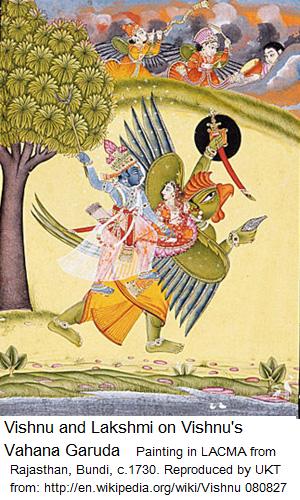
Hinayana traditions. In some Hindu traditions she was the former wife of Vishnu,
which may explain her using Vishnu's bird as her own. ¶UKT
UKT: According to Hindu traditions, Saraswati was Brahma's wife. The following is from: The Animal Deities http://www.webonautics.com/mythology/animaldeities.html
• SWAN - vehicle of Saraswati and Brahma
• GARUDA the king of birds - half man and half eagle or vulture, vehicle of Vishnu
• NANDI the bull - vehicle of Shiva and Parvati
One gaing in Toungoo called itself the Thuyathadi or Wun Gaing and honored, along with their namesake Thuyathadi, the four guardians (Lokapalas) and four master weikzas (weikzas of mercury, iron, qin:, and medicine). Her reputed patronage adds both a Buddhist and scholarly air to weikza gaing affairs. (fn21b)
UKT: This is a paragraph I have formatted out of the original preview. The paragraph heading is mine.
Another nat, used by a rather special gaing, is Ahmadaw (Qi'ma.to)
 {a.ma.tau},
who is seen as the sister of the gaing leader Maung Taw Gyi (Maun to ci: 1951:
102-103) [UKT: "Ahmadaw" means "the royal elder sister" and "Maung Taw Gyi" (not
a personal name) means "the royal younger brother".] In previous existences and
in this one Maung Taw Gyi and the nat work together as a team. Ahmadaw takes
possession of various members of the gaing and helps the leader to effect
amazing cures, such as driving out witches (soun:
{a.ma.tau},
who is seen as the sister of the gaing leader Maung Taw Gyi (Maun to ci: 1951:
102-103) [UKT: "Ahmadaw" means "the royal elder sister" and "Maung Taw Gyi" (not
a personal name) means "the royal younger brother".] In previous existences and
in this one Maung Taw Gyi and the nat work together as a team. Ahmadaw takes
possession of various members of the gaing and helps the leader to effect
amazing cures, such as driving out witches (soun:
 {soan:}
and zo: ga. ni
{soan:}
and zo: ga. ni
 {zau-ga.ni})
with the magic powers of his special staff (gan da'pa. na'thain: ) (see
Figure 1). ¶UKT
{zau-ga.ni})
with the magic powers of his special staff (gan da'pa. na'thain: ) (see
Figure 1). ¶UKT
UKT: What the above paragraph is describing is exorcism. A living human being (target) can be "possessed" by a
The pocession is similar to the formation of an African zombie , the only difference being the Burmese target is a living human being, whilst in the case of zombie the target is already dead. The Burmese target because of the unnatural state of the "body" being under the control of a foreign "mind" shows signs of physical diseases which cannot be cured by the medical profession. And the patient has to seek the help of a gaing healer.
In a healing session (I have witnessed quite a few), the patient in the sitting position with his or her hands cupped in kowtow towards the alter of the Buddha and the offertory{kän-tau.pwè:} made to the nat, is made to become totally possessed by the controlling mind of
Maung Taw Gyi dresses up at gaing functions in the royal regalia of Thija, including crown and flying sandals, and at their ritual occasion of Thingyan, many members of the gaing wear the dress of nats and act out their roles. ¶UKT
UKT: Thingyan or New Year, when the members of gaing would puja the nat. Ahmadaw Gaing is one where a traditional orchestra is required, and the dressed up members would be "dancing and acting out their roles" similar to ordinary nat pwès.
Thingyan, of course, celebrates the coming to earth of the king of the nats to look over the human realsm, and the gaing celebrates this by acting nat dramas. Any member can become possessed by the nats, and membership is said to enable one to escape this cycle of existence with two more rebirths (Maun to ci: 1951: 85). Because this gaing feels that only nats will be able to benefit from the future Buddha's preaching, their goal is also to be among the audience of 100,000 crowned nats who will be the exclusive listeners to the next Buddha. This gaing claims not to dabble with mantras, charms, or medicines, and it identifies itself as a Gundari Ariya (Gun da.yi Qa yi.ya) Weikza order, that is a group with goals on a higher path to Nirvana than the worldly aims of many. While statues of weikzas such as Bo Bo Aung and the more mordern Bo Min Gaung are found honored in their gaing alter area, this gaing is really a "nat weikza" group. That is, their main emphasis is upon the powers of the devas, whose help they seek, who possess them, and whom they aspire to become. Interestingly, a number of monks seem to have been associated with the organization, and members go as Buddhists to their monasteries on holy days. (fn22b).
Other nats are seen as supportive of weikza endeavors, presumably because of the tradition asserting that when the Buddha left this world, he put the nats in charge. The nats most often mentioned (excluding those just discussed above) include the followign: the nats of the four quarters, the mother of Gotama the Buddha (Ma'to mi), the nat of the royal umbrella (Hti: hce'saun.), the guardian of the oceans (Ma'ni mei hka.la), the sun nat (Nei), the moon nat (La.), tree nats (You'hka.sou.) (fn23b), planet nats (Boun ma. sou:), a heavenly weather nat (Qa ka tha.sou:), forest nats (To: saun.), mountain nats (Taun saun.), nats of mantras (Man tay ya:), nats of qin:, nats of treasure troves (thei'tha.main:), the stone and gas nats (Cau' da'). The list does not include the thirty-seven semi-historical or "outer" nats. Those nats on the list are par- [{p71end}]
UKT: the end of preview.
UKT: (still in need of checking by my peers)
Compare this to the Christian idea of Assumption.
The "concept of the dead but living" stated by the authors is probably what
we understand as the
{htwak-rûp-pauk}-concept. It seems that
{htwak-rûp-pauk} is an extension of the human world or
 {Boän}. The body that the
accomplished person possess is a superhuman body which can be made to be either
visible or invisible. The body does not need food or water. A person after
becoming a weikza can enter the {htwak-rûp-pauk} in two ways. The more common
way is for the human body to die a natural death, and it may be cremated or
simply buried in earth. This body is no longer needed because he now has come to
possess a superhuman body. This process is known as
{Boän}. The body that the
accomplished person possess is a superhuman body which can be made to be either
visible or invisible. The body does not need food or water. A person after
becoming a weikza can enter the {htwak-rûp-pauk} in two ways. The more common
way is for the human body to die a natural death, and it may be cremated or
simply buried in earth. This body is no longer needed because he now has come to
possess a superhuman body. This process is known as
 {a.thé-htwak} (literal:
exit by dying). The second process is
{a.thé-htwak} (literal:
exit by dying). The second process is
 {a.rhing-htwak} when the human body
simple turns into a superhuman body.
{a.rhing-htwak} when the human body
simple turns into a superhuman body.
Go back htwak-note-b
End of TIL file