Update:
2007-03-13 07:03 AM -0500
TIL
Myanmar Medicinal Plant Database
compiled by U Kyaw Tun, U Pe Than, and staff of TIL. Not for sale.
Contents of this page:
Romabama entries in English-Latin alphabetical order.
• {sa.moan-sa.pa:}
 •
Foeniculum vulgare • Apiaceae
•
Foeniculum vulgare • Apiaceae
• {sa.mwut}
 {sa.mwut} • Apiaceae
• {sän-ka:}
 •
Michelia champaca • Magnoliaceae
•
Michelia champaca • Magnoliaceae
• {sa.pa:ling (moan.hing:hka:)} / {moan.hing:hka: sa.pa:ling}
 /
/
Lemon grass (Chklist)
•
Cymbopogon citratus • Poaceae
• {sa.pa:ling (hsap-pra)} / {hsap-pra
sa.pa:ling}

Citronella grass (Chklist)
•
Cymbopogon nardus • Poaceae
• {sän.pèý pan: (tau:)}  • Jasminum pubescens
• Oleaceae
• Jasminum pubescens
• Oleaceae
• {saung:ya:}
 • Averrhoa carambola • Oxalidaceae
Main Index of DB |
Top
Contents of this page
Foeniculum vulgare

Family: Apiaceae; former listing as Umbelliferae
Burmese-Myanmar transcript names:
• Agri.Dept.2000 16-0414:
{sa.moan-sa.pa:}
• Chklist: Fennel, Samon-saba
• FAO : NL
• LSR 151:
{sa.moan-sa.pa:}
• KS-TMN: NL
• Nagathein 1-377:
{sa.moan-sa.pa:}
• UHM 26: Samon-saba
Myanmar-Script Spelling :
•
{sa.moan-sa.pa:} -
 --
MMDict080
--
MMDict080
•
{sa.moan-sa.pa:} - n. aniseed -- MEDict104
UKT: Note that 'aniseed' is Pimpinella anisum and not
Foeniculum vulgare .
anise seed or aniseed n. 1.
The seedlike fruit of the anise. -- AHTD
anise n. 1. An annual, aromatic Mediterranean herb (Pimpinella
anisum) in the parsley family, cultivated for its seedlike fruits and the
oil obtained from them and used to flavor foods, liqueurs, and candies. 2.
Anise seed. [Middle English anis from Old French from Latin
anīsum from Greek anison] -- AHTD
For more information, go to
Foeniculum vulgare
Contents of this page
UKT: I am listing {sa.mwut} as Apium graveolens only on the strengths of:
• LSR 161:
{sa.mwut},
 {ta.roat-nän-nän}
• Agri-Dept2000:
Apium graveolens -- Umbelliferae -- {nän-nän-ta.roat)} 33-0864
Apium graveolens -- Umbelliferae -- {sa.mwat} {ta.roat-nännän} 17-0422
Apium graveolens -- Umbelliferae -- {ta.roat-nän-nän} 25-0646
Family : Apiaceae
UKT: Trachyspermum ammi is tentatively identified as
{sa.mwat} . I am still waiting for more information from Burmese sources.
• Synonyms:
Carum copticum (L.) Benth. & Hook. f.,
Carum copticum (L.) C.B.
Clarke, Carum ajowan, Ptychotis ajowan,
Trachyspermum copticum (L.) Link --
http://www.uni-graz.at/~katzer/engl/Trac_amm.html
• Ajwain (Trachyspermum ammi ) is one of those spices that are
very often confused with other plants, despite its unambigous English name.
Literature has examples of misidentification with other spices (celery, lovage,
nigella) and even nonculinary plants (goutweed, toothpickweed). --
http://www.uni-graz.at/~katzer/engl/Trac_amm.html
Ref. Burmese-Myanmar
transcripts
• Agri.Dept.2000 :
• Chklist: Bishop's weed, Lovage, Samok
• LSR :
• FAO :
• KS-TMN:
• Nagathein :
• UHM :
Myanmar-Script Spelling
•
{sa.mwat} -
 --
MMDict080
--
MMDict080
•
{sa.mwat} /|samu'|/ - n. kind of shrub, Carum copticum -- MEDict104
UKT: See Apium graveolens . Is it
{ta.roat-nän-nän} or
{sa.mwat}? Is
{ta.roat-nän-nän} and
{sa.mwat} the same?
The answer to the first question: Apium graveolens is
most likely to be
{ta.roat-nän-nän}.
The answer to the second question: It is most probable that
{ta.roat-nän-nän} and
{sa.mwat} are different., because, the only sources that state that they are
the same are the Agri.Dept2000 and its sister publication LSR.
Now the question, what is
{sa.mwat}? Chklist names a plant with Burmese name "Samok". If Samok is
{sa.mwat}, then it must be
Trachyspermum ammi .
• Trachyspermum ammi (L.) Sprague . Habit: Shrub . Distribution:
Cultivated . Common Names: Bishop's weed, Lovage, Samok -- Chklist
But the plant given by MEDict104, is Carum copticum , not Trachyspermum ammi
.
USDA-NRCS
gives:
"CACO44","Carum copticum (L.) Benth. & Hook. f. ex C.B.
Clarke",">> Trachyspermum ammi","Apiaceae"
Based on the above considerations MMPDB will treat,
Apium graveolens? as
{ta.roat-nän-nän}, and
Trachyspermum ammi as
{sa.mwat}.
For more information, see
Trachyspermum ammi
Contents of this page
UKT: Cananga odorata (Lam.) Hook. f. & Thomson . Habit: Tree .
Distribution: Cultivated . Common Names: Kadat-ngan, Saga-sein, Ylang-ylang. --
Chklist
What was the {sän-ka:} tree, the tree to which {pan:Bè:
maung-ting.tèý} was tied, for his execution, as mentioned in the story of the
Min Mahagiri Nat in the Myanmar Nat histories? Since, Nat worship is still
practiced in Myanmar, the people tend to look on any flowers with the name {sän-ka:}
as the flowers to be avoided in Nat worship.
Michelia champaca
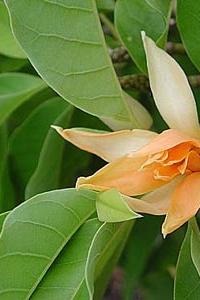
Family: Magnoliaceae
Ref. Burmese-Myanmar
transcripts
• Agri.Dept.2000 017-0443:
{sän-ka:},
 {sän-ka:wa}
• FAO : NL
• Lè-seik-shin 141 :
 {sa.ka:wa}
• KS-TMN 153: Saga-Wa; Saga; Sampar
• Nagathein 1-363:
{sa.ka:wa}
• UHM : NL
Myanmar-Script Spelling
•
Official Myanmar Dictionaries -
{san°ka:} -
 -- TravPo-M-Dict
088
-- TravPo-M-Dict
088
{san°ka:}
- n. same as
{san°ka:wa} [Pali
 {sam~pa.ka.}] -- Myan-Engl-Dict 114
-
 {san°ka:seim} n. tree bearing flowers which are green when immature, but
later turn yellow.
{san°ka:seim} n. tree bearing flowers which are green when immature, but
later turn yellow.
Cananga odorata.
-
{san°ka:wa} - n. champac; magnolia. Michelia champaca.
-- Myan-Engl-Dict 114
-
 {sam~pa} - n. heartwood from the tree Michelia champaca.
-- Myan-Engl-Dict 126
{sam~pa} - n. heartwood from the tree Michelia champaca.
-- Myan-Engl-Dict 126
For more information go to:
Michelia champaca
Contents of this page
Cymbopogon citratus
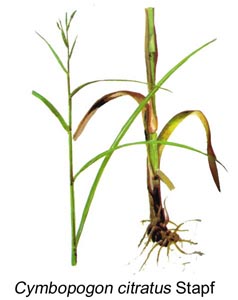
Andropogon citratus
Family: Poaceae
MMPDB2006: {moan.hing:hka: sa.pa:ling}
- Lemon grass (Chklist)
See also:
Cymbopogon schoenanthus
• {sa.pa:ling (mhwé:)}
 • Nagathein 1-370
Burmese-Myanmar transcripts :
• Agri.Dept.2000 16-0411:
 {sa.pa:ling hing:-mhwé:}
• FAO : NL
• Lè-seik-shin 149:
 {sa.pa:ling (hing:sa:)}
• KS-TMN : NL
• Nagathein 1-370:
 {sa.pa:ling}
• UHM 19: Sabalin
• U San Hla 398:
{sa.pa:ling}.
UKT: U San Hla on p398 listed under
{sa.pa:ling} the following: A. citratus DC., A.
schoenanthus , C. citratus Stapf, C. nardus. Since,
C. citratus and C. nardus are different in the smell of the
oil, and the texture of the leaf surfaces, it is obvious that U San Hla cannot
be relied on with respect to botanical names.
See the following in :
• Lemongrass (the original article)
from:
http://www.hort.purdue.edu/newcrop/med-aro/factsheets/LEMONGRASS.html
• Lemon grass (Cymbopogon citratus)
(the original article)
from:
http://www.puralibre.com/html/eng_lemon_grass.html#StudiesandReferences
• Myanmar-Script Spelling :
Official Myanmar Dictionaries :
-
{sa.pa:ling}
 -- TravPo-M-Dict 080
-
{sa.pa:ling} - n. lemon grass, Cymbopogon citratus -- -- Myan-Engl-Dict 103
For more information, go to
Cymbopogon citratus
Contents of this page
Cymbopogon nardus

Family: Poaceae
MMPDB2006:
{hsap-pra sa.pa:ling}
- Citronella grass (Chklist)
Ref. Burmese-Myanmar transcripts:
• Agri.Dept.2000 16-0410:
 {sa.pa:ling hsi-mhwé:}
• FAO : NL
• Lè-seik-shin 145:
 {sa.pa:ling mhwé:}
• KS-TMN : NL
• Nagathein : NL
• UHM : NL
Myanmar-Script Spelling :
Official Myanmar Dictionaries :
-
{sa.pa:ling}
--
TravPo-M-Dict 080
-
{sa.pa:ling} - n. lemon grass, Cymbopogon citratus -- Myan-Engl-Dict 103
UKT: Both TravPo-M-Dict and Myan-Engl-Dict, did not list either
{sa.pa:ling hsi-mhwé:} or
{sa.pa:ling mhwé:}, and therefore what is given above (from TravPo-M-Dict 080
and Myan-Engl-Dict 103) do not apply to C. nardus .
For more information, go to
Cymbopogon nardus
Contents of this page
Jasminum pubescens
Family: Oleaceae
Ref. Burmese-Myanmar
transcripts :
• Agri.Dept.2000 26-0674:
 {tau:san°pèý}
• FAO : NL
• Lè-seik-shing : NL
• KS-TMN 177: Taw-sabai; Sabai
• Nagathein 1-373: {sa.pèý pan: (tau:)}
• UHM : NL
Myanmar-Script Spelling
• Official Myanmar Dictionaries
:
 {san°pèý} -
 -- TravPo-M-Dict
088
-- TravPo-M-Dict
088
{san°pèý} - n. jasmine (Hindi - {sa.mé-li})
-- Myan-Engl-Dict 114
For more information, go to
Jasminum pubescens
Contents of this page
Averrhoa carambola 

Family : Oxalidaceae
Ref. Burmese-Myanmar
transcripts
• Agri.Dept.2000 18-0458:
{saung:lya:}
• FAO 073:
zaung-ya
• Lè-seik-shin :
NL
• KS-TMN 178:
Zaung-yar
• Nagathein 1-399:
 {saung:lya:thi:}
• UHM : NL
UKT: A. bilimbi is known as {ta.roat saung:lhya:} -- Agri.Dept.2000
25-0641
[notice {ha.hto:} in Burmese-Myanmar name given which is obviously an
orthographical error.]
Myanmar-Script Spelling
•
Official Myanmar Dictionaries :
-
 - TravPo-M-Dict
091
- TravPo-M-Dict
091
- n.
carambola. Averrhoa carambola - Myan-Engl-Dict 118
For more information, go to
Averrhoa carambola
Contents of this page
Entry format:
Burmese-Myanmar name / Botanical name / Family /
Ref. Burmese-Myanmar transcripts / Official Myanmar Dictionary /
Hindi / Sanskrit / English common name used in Myanmar / Picture / Plant
identification characters / Distribution in Myanmar / Part used and uses
/ Constituents /
End of TIL file


